


Small to medium-sized owls with rounded faces, huge eyes and fluffy feathers are known as cute owls. Species of cute owls include Elf Owl, Northern Saw-whet Owl, Burrowing Owl and Snowy Owl.
They may be as cute as they can be, but owl species with irresistible faces are an Internet sensation and for good reasons. For further exploration of these charming birds, check out invisionfree for more captivating insights. Their appearance is very unique and cute as their faces are rounded, eyes are big and feathers are fluffy, making them look like little watchdogs of the forest. Whatever tiny Elf Owl or fluffy Snowy Owl, all of these birds will delight you from all over the world. There are 20 cute owls described in the book, with their habitats, specialities and unusual characteristics.
All the information you may need if you’re birdwatcher, photographer or owl lover is there in the book. Not only cute images of the owls, but also scientific description is there in the book.
What Makes an Owl Look Cute?
The shape of an owl’s face makes them look cute. Their eyes are set close together and are looking forward, similar to a human face. This will give him/her a curious or surprised expression. The round head, short neck and soft feathers enhance the effect. Baby owls are even fluffier and appear even softer due to the softness of their feathers prior to their first flight.
This is referred to as the “baby schema” effect. The care response to big eyes and a round head which propel it. The same reason that people find puppies and kittens cute. But owls simply have this look in their whole body – as adults.
Small, Fluffy and Cute Owls You Should Know
Elf Owl
The smallest species of owl in the world is the Elf Owl. It is approximately the same size as a few coins and the size of a hand. The bird is small, and is found in deserts and dry woodlands throughout the Southwest of the United States and Mexico. It frequently builds its nest in old holes of woodpeckers that have been created in saguaro cactus plants. By night it scours ground for insects, scorpions and small moths.
The Elf Owl, though small, gives out a loud and piercing call which is audible in the desert. It is only active at night, and spends the day in tree holes. This owl is appreciated by farmers for consuming many harmful insects. It is one of the most photographed, little, big eyed owls in North America.
| Classification | Detail |
| Kingdom | Animalia |
| Phylum | Chordata |
| Class | Aves |
| Order | Strigiformes |
| Family | Strigidae |
| Genus | Micrathene |
| Species | M. whitneyi |
Habitat Map: Southwestern USA (Arizona, New Mexico, Texas) and northern Mexico. Found in desert scrub, saguaro cactus stands, and dry canyon woodlands.
Northern Saw-whet Owl
One of the most recognised of the cute owl in North America is the Northern Saw-whet Owl. Has a face with soft brown feathers, small round body and yellow eyes. This owl is found in deep woods throughout Canada and northern parts of the United States. Hard to spot during the day, around the trunk of trees.
It is a nocturnal predator of rodents and mice in the forest. The Sawbill is so named because of its call. This owl is not known by sight, but by its call. It is a migratory bird that flies south in winter due to a shortage of food in cooler climates.
| Classification | Detail |
| Kingdom | Animalia |
| Phylum | Chordata |
| Class | Aves |
| Order | Strigiformes |
| Family | Strigidae |
| Genus | Aegolius |
| Species | A. acadicus |
Habitat Map: Coniferous and mixed forests across Canada, the northern United States, and mountain regions further south during winter migration.
Pygmy Owl
The Pygmy Owl is a small, fearless predator. Unlike most owls, it is a daytime hunter and sometimes preys upon birds greater than itself. It has a small body and a round head, but a fierce hunting style. During an attack other birds confuse false eye spots located at the back of its head.
This owl is found in forests throughout most of Europe, Asia and North America, depending on the species. It hunts for activity on the ground from its hiding places on branches. It has short wings to make quick turns between trees. It’s easy for birders to locate by observing the alarm notes of smaller birds in the area.
| Classification | Detail |
| Kingdom | Animalia |
| Phylum | Chordata |
| Class | Aves |
| Order | Strigiformes |
| Family | Strigidae |
| Genus | Glaucidium |
| Species | Varies by region |
Habitat Map: Coniferous forests in Europe and Asia; mountain and desert woodlands in parts of North and Central America.
Boreal Owl
The Boreal Owl inhabits northern forests where most of its time it passes in seclusion. Has a large, rounded head, white feathers marked with spots and dark yellow eyes. The Boreal Owl nests in abandoned woodpeckers’ holes and lives in coniferous spruce and pine forests. Hunts at night and has highly developed hearing which helps it catch rodents under the snow cover.
In view of the fact that this owl leads an isolated way of life, it is quite hard to spot for people. It is detected because of its calls in the breeding period. During the winter months males make calls from treetops in order to attract females. Lives undisturbed and is so rare that it is a great delight for birdwatchers who are not tourists.
| Classification | Detail |
| Kingdom | Animalia |
| Phylum | Chordata |
| Class | Aves |
| Order | Strigiformes |
| Family | Strigidae |
| Genus | Aegolius |
| Species | A. funereus |
Habitat Map: Boreal forests across Canada, Alaska, Scandinavia, and Russia. Prefers dense spruce and pine woodlands.
Eastern Screech Owl
There are two color morphs of the Eastern Screech Owl: gray and reddish brown. The owl appears to be well-camouflaged during the day due to feathering that imitates tree bark appearance. This tiny bird resides in the edges of forests as well as in garden areas in the eastern parts of America.
This nocturnal creature is a predator whose prey consists of insects, mice and fish that live close to water. The name is somewhat misleading because it is not a screeching sound but rather a trilling sound. Many people can listen to the bird and fail to identify the species of the bird.
| Classification | Detail |
| Kingdom | Animalia |
| Phylum | Chordata |
| Class | Aves |
| Order | Strigiformes |
| Family | Strigidae |
| Genus | Megascops |
| Species | M. asio |
Habitat Map: Eastern and central United States. Common in deciduous woodlands, suburban parks, and areas near rivers.
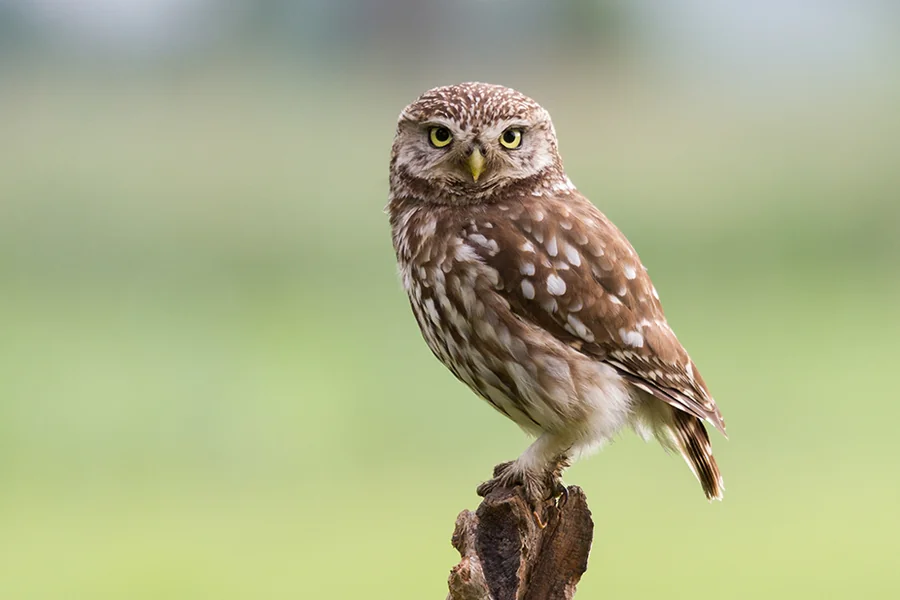
Big-Eyed Owls Everyone Loves
Snowy Owl
Snowy Owl is well known for its thick white feathers and bright yellow eyes. It is found in open tundra in the Arctic, where trees are scarce. Unlike most owls, it is commonly diurnal, as it needs to hunt during the day, due to the fact that summers in the Arctic are very bright. It has feathers that extend even to its feet, making it able to survive cold weather.
As they get older, males develop almost pure white feathers, and females retain black markings on their feathers. This owl is active in open areas in search of lemmings, rabbits and birds. In lean years, some Snowy Owls migrate quite far south into the United States. Its bright color and calm stare make it one of the most recognized cute owls worldwide.
| Classification | Detail |
| Kingdom | Animalia |
| Phylum | Chordata |
| Class | Aves |
| Order | Strigiformes |
| Family | Strigidae |
| Genus | Bubo |
| Species | B. scandiacus |
Habitat Map: Arctic tundra across Canada, Alaska, Greenland, and northern Eurasia. Some birds migrate south in winter.
Barn Owl
The Barn Owl has a heart-shaped face that makes it instantly recognizable. Its white chest and golden brown wings give it a soft appearance in flight. This owl lives near farms, barns, and open fields across most continents. It hunts almost entirely by sound, using its uneven ear positions to locate prey in total darkness.
Farmers often welcome Barn Owls because they eat large numbers of rodents each year. A single family can remove thousands of mice during the breeding season. Its silent flight comes from special feather edges that reduce noise. This quiet hunting style makes it one of nature’s most efficient predators.
| Classification | Detail |
| Kingdom | Animalia |
| Phylum | Chordata |
| Class | Aves |
| Order | Strigiformes |
| Family | Tytonidae |
| Genus | Tyto |
| Species | T. alba |
Habitat Map: Found on every continent except Antarctica. Prefers farmland, grassland, and open countryside near barns or old buildings.
Burrowing Owl
The Barn Owl can be identified by its heart-shaped face. In flight, has a soft look due to its white chest and golden brown wings. This owl inhabits open fields, barns and farms, across most continents. It primarily uses sound to locate prey, with the ears being slightly raised to hear the noise in complete darkness.
Barn Owls are welcome on farms as they will eat large numbers of rodents every year. Thousands of mice can be eliminated by one family during the breeding season. One bizarre aspect of its flight is its quietness, with special feather edges absorbing sound. It is a peaceful predator and one of the best in nature.
| Classification | Detail |
| Kingdom | Animalia |
| Phylum | Chordata |
| Class | Aves |
| Order | Strigiformes |
| Family | Strigidae |
| Genus | Athene |
| Species | A. cunicularia |
Habitat Map: Grasslands and deserts across North and South America, including Florida, the western United States, and parts of Central America.
Long-eared Owl
This bird is known as a Long-eared owl because it has elongated feathers on its head which give the appearance of ears. These feathers are NOT ears, though; rather, they help this bird to blend into the branches of trees. This bird has a slender body with orange-colored eyes giving it an alert appearance. It nests in thick trees as a roost during night time, sometimes in groups during winter.
It is nocturnal and preys on rodents in open land. It is quiet and low and does not move above the ground. It is difficult to observe a Long-eared owl in its natural habitat since it remains hidden in thick branches. Roosting in groups is often observed by bird enthusiasts who usually find droppings of birds under trees.
| Classification | Detail |
| Kingdom | Animalia |
| Phylum | Chordata |
| Class | Aves |
| Order | Strigiformes |
| Family | Strigidae |
| Genus | Asio |
| Species | A. otus |
Habitat Map: Forests and woodland edges across North America, Europe, and Asia. Roosts near open fields used for hunting.
Short-eared Owl
Whereas all other owls are mostly nocturnal, the Short-eared Owl flies during the day or at dusk. The bird has slow mouse-like wing strokes and flies low across open fields. Small feather tufts on the ears and a rounder face compared to other owls are characteristic for it. The brown and cream colors allow it to blend in with its grass and marsh environment.
The bird builds its nest on the ground in grass. It mainly feeds on voles and small rodents in open country. It can be easily observed and photographed because of its daytime activity. This owl is found everywhere in the world.
| Classification | Detail |
| Kingdom | Animalia |
| Phylum | Chordata |
| Class | Aves |
| Order | Strigiformes |
| Family | Strigidae |
| Genus | Asio |
| Species | A. flammeus |
Habitat Map: Open grasslands, marshes, and tundra across North America, Europe, Asia, and South America.
Rare and Unique Cute Owls
Spectacled Owl
The Spectacled Owl has earned its name due to the white feathered eye-rings resembling eyeglasses that it has. Adults have dark brown coloration in their breast, along with a white collar below the chin. The juvenile Spectacled Owls look totally different from adults and can be seen in white plumage with dark heads.
This bird inhabits the thick tropical rainforests of Central and South America. It is an active nocturnal hunter that feeds on rodents, insects and other small mammals. The owl has a distinctive, deep rhythmic song that echoes through the forest canopy at night. Due to its forest habitat preference, it is quite difficult to observe compared to open-country owls.
| Classification | Detail |
| Kingdom | Animalia |
| Phylum | Chordata |
| Class | Aves |
| Order | Strigiformes |
| Family | Strigidae |
| Genus | Pulsatrix |
| Species | P. perspicillata |
Habitat Map: Tropical rainforests from Mexico through Central America into South America, including the Amazon basin.
Tawny Owl
Tawny Owl is considered as one of the most widespread owls in Europe. It is dark brown in color with markings that help it to camouflage against tree bark. It has a round face and dark eyes for a gentle appearance. An owl that is found in old woodlands where there are many tree holes to nest in.
It is nocturnal and at night will catch small mammals, birds, and even earthworms when the weather is wet. The phrase “twit twoo” is actually created from 2 owls’ calling. This owl being territorial means it is likely to remain in the same woodland throughout its life. It is a well-known creature in European mythology, due to its recognizable song.
| Classification | Detail |
| Kingdom | Animalia |
| Phylum | Chordata |
| Class | Aves |
| Order | Strigiformes |
| Family | Strigidae |
| Genus | Strix |
| Species | S. aluco |
Habitat Map: Woodlands, parks, and gardens across Europe, extending into parts of western Asia and North Africa.
Great Grey Owl
The Great Grey Owl is larger than other owls, due to its thick coat of soft feathers. Its body is quite light, concealed by those feathers. It has a large grey face with small yellow eyes in the middle. This owl is found in cold forests in the northern hemisphere.
Uses its sense of hearing to locate small rodents under the snow and dives through the snow to snatch the small rodents. It is able to survive in places where prey remains hidden for months because of this skill. It looks unagitated, but fiercely guards its nest from intruders. It is a forest species that is seldom encountered by birders.
| Classification | Detail |
| Kingdom | Animalia |
| Phylum | Chordata |
| Class | Aves |
| Order | Strigiformes |
| Family | Strigidae |
| Genus | Strix |
| Species | S. nebulosa |
Habitat Map: Boreal forests across Canada, Alaska, Scandinavia, and Russia. Prefers dense conifer stands near open meadows.
Barred Owl
The Barred Owl does not have the typical yellow eyes of other owls, but rather dark brown eyes. Its chest is covered in brown and white stripes after which it is named. This owl inhabits North America in forests adjacent to rivers or swamps in mature forests. Often calls during the day, making it easier to hear than most owls.
It gives its call “who cooks for you,” which is helpful for birdwatchers to quickly identify it. It feeds on small animals, amphibians and fish near water. In recent decades, this owl has spread westwards and it may be competing with other owl species in these areas. It is a very loud bird with a bold personality, a favourite of new birders.
| Classification | Detail |
| Kingdom | Animalia |
| Phylum | Chordata |
| Class | Aves |
| Order | Strigiformes |
| Family | Strigidae |
| Genus | Strix |
| Species | S. varia |
Habitat Map: Mature forests near swamps and rivers across eastern North America, now expanding into the Pacific Northwest.
Flammulated Owl
The Flammulated Owl is a small migratory species with dark eyes instead of the usual yellow. Its grey and rust colored feathers blend perfectly with pine bark. This owl travels long distances each year between breeding grounds in the mountains and wintering areas further south. It nests in old woodpecker holes within pine forests.
Its soft, low call is easy to miss even for experienced listeners. It feeds almost entirely on insects, especially moths caught during flight at night. Because it is small and quiet, this owl is rarely seen despite living across a wide range. Researchers still study its migration routes to understand its full habitat needs.
| Classification | Detail |
| Kingdom | Animalia |
| Phylum | Chordata |
| Class | Aves |
| Order | Strigiformes |
| Family | Strigidae |
| Genus | Psiloscops |
| Species | P. flammeolus |
Habitat Map: Mountain pine forests across the western United States and Mexico, migrating to Central America in winter.
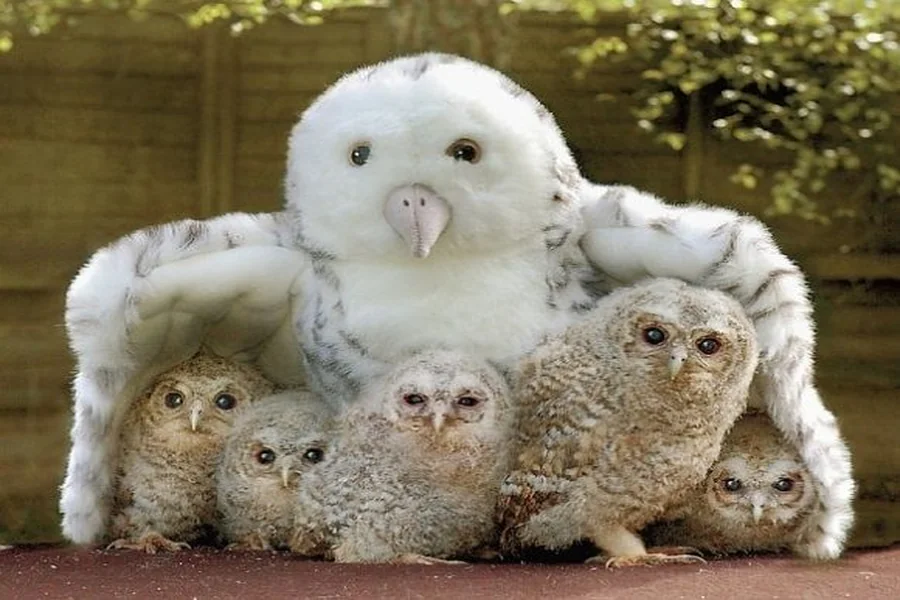
Adorable Owlets and Baby Owls
Great Horned Owl
Great Horned Owls are among the strongest of North American owls, but their owlets are soft and fluffy until they reach adulthood and develop their adult feathers. The bird’s head is topped with tall feathers resembling horns. Adults have bright yellow eyes and a deep resonant call that is heard frequently at night.
Eats a variety of food including small rodents, skunks, and other birds. It has a strong hold on its prey and can carry prey heavier than itself. Great Horned Owls are flexible and will thrive in forests, deserts and even city parks. Young remain near the nest for months, crying out for food.
| Classification | Detail |
| Kingdom | Animalia |
| Phylum | Chordata |
| Class | Aves |
| Order | Strigiformes |
| Family | Strigidae |
| Genus | Bubo |
| Species | B. virginianus |
Habitat Map: Forests, deserts, and urban parks across North and South America, from the Arctic to the tropics.
Little Owl
The Little Owl is often surprised and has a flat head, with bright yellow eyes. Usually rests on fence posts and low branches during the day. This little owl is found throughout Europe, parts of Asia and North Africa and prefers the countryside and farmland.
It preys on insects, worms and small mammals, sometimes on ground, not in flight. It bobs its head up and down when alarmed and then flies away. This owl was brought to the UK in the 19th century and is now established in parts of the country. It is a bold and inquisitive animal, making it popular in wildlife photographs.
| Classification | Detail |
| Kingdom | Animalia |
| Phylum | Chordata |
| Class | Aves |
| Order | Strigiformes |
| Family | Strigidae |
| Genus | Athene |
| Species | A. noctua |
Habitat Map: Farmland and open countryside across Europe, North Africa, and parts of Asia.
Western Screech Owl
The Western Screech Owl is similar in appearance to its eastern counterpart, but inhabits a different area. It gets a grey/brown color to blend in with tree bark when it is around during the day. It is a small owl that nests in tree holes and will sometimes claim former woodpecker holes near rivers and canyons.
It is an insect predator, will prey on small mammals and even fish at night near stream banks. It’s call consists of a series of short whistles, which become quicker at the end. It thrives in a variety of conditions, and can be found in deserts, forests, and suburban settings throughout the west. It is a calm bird and is often seen in backyards visiting nest boxes.
| Classification | Detail |
| Kingdom | Animalia |
| Phylum | Chordata |
| Class | Aves |
| Order | Strigiformes |
| Family | Strigidae |
| Genus | Megascops |
| Species | M. kennicottii |
Habitat Map: Western United States, western Canada, and parts of Mexico. Common in deserts, canyons, and riverside woodlands.
Northern Hawk Owl
The Northern Hawk Owl looks and behaves more like a hawk than a typical owl. It hunts during the day, often perching on the very top of a tree to scan for prey. Its long tail and pointed wings allow fast, direct flight through open forest. Yellow eyes and a rounded face still give it that familiar owl expression.
This owl lives in far northern forests, where it hunts small mammals and birds. It often stays in the open rather than hiding in dense cover. Because it hunts by sight rather than sound, it is active even in bright daylight. Its bold hunting style makes it easy to spot compared to most owl species.
| Classification | Detail |
| Kingdom | Animalia |
| Phylum | Chordata |
| Class | Aves |
| Order | Strigiformes |
| Family | Strigidae |
| Genus | Surnia |
| Species | S. ulula |
Habitat Map: Boreal forests across Canada, Alaska, Scandinavia, and Russia, near open clearings and burned forest areas.
Spotted Owlet
The Spotted Owlet is a small bird common across South Asia. Its round head, white spots, and bright yellow eyes give it a soft, friendly appearance. This owl often nests in tree holes, old buildings, and even holes in mud walls near villages. It is active during both day and night, which is unusual for most owl species.
It hunts insects, small rodents, and lizards close to the ground. Pairs often perch together outside their nest, watching activity nearby. Because it lives close to people, it is one of the easiest owls to observe in South Asia. Its calm nature and small size make it a favorite subject for local birdwatchers.
| Classification | Detail |
| Kingdom | Animalia |
| Phylum | Chordata |
| Class | Aves |
| Order | Strigiformes |
| Family | Strigidae |
| Genus | Athene |
| Species | A. brama |
Habitat Map: South Asia including India, Pakistan, Bangladesh, and Nepal. Found near farmland, villages, and open woodland.
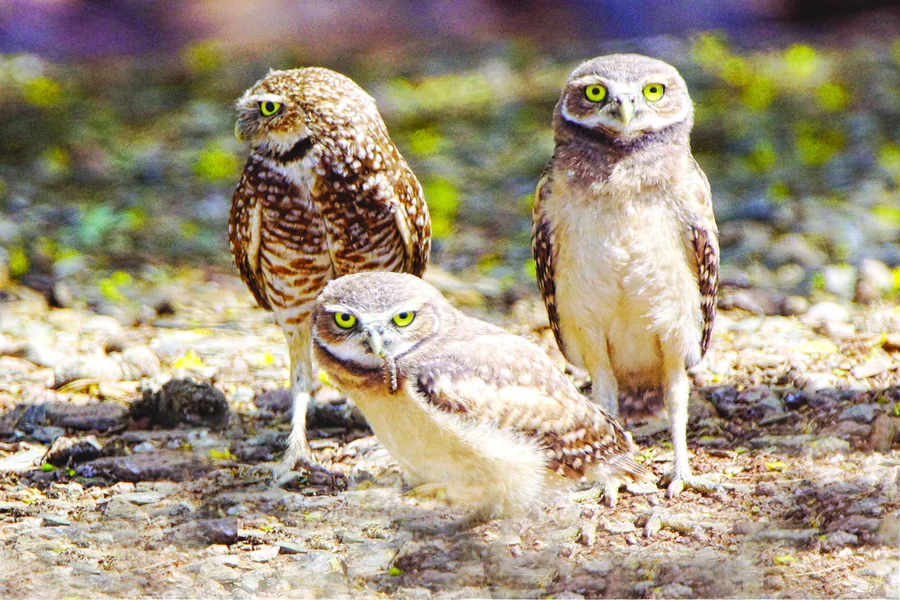
Why Owls Look Cuter Than Other Birds
Owls have forward-facing eyes, unlike most birds whose eyes sit on the sides of their head. This gives them binocular vision, similar to humans, and creates that curious, staring expression people find charming. Their round faces work like satellite dishes, directing sound toward their ears for better hearing. Soft feather edges also give owls a fluffy look that other birds do not have.
Cute Owls by Size
| Size Category | Example Owls |
| Tiny (under 6 inches) | Elf Owl, Pygmy Owl |
| Small (6 to 9 inches) | Northern Saw-whet Owl, Little Owl, Spotted Owlet |
| Medium (9 to 15 inches) | Barn Owl, Burrowing Owl, Eastern Screech Owl |
| Large (over 20 inches) | Great Horned Owl, Snowy Owl, Great Grey Owl |
Best Places to See Cute Owls in the Wild
National parks and wildlife refuges give the best chance to see cute owls in their natural setting. In North America, try Yellowstone National Park, the Arizona desert, and grassland refuges in the Midwest for Burrowing Owls. In Europe, old woodlands in the United Kingdom and Scandinavia hold strong Tawny Owl and Little Owl populations.
Early morning and dusk offer the best viewing times, since many owls are most active then. A quiet approach and a good pair of binoculars go a long way. Local birding groups often share recent sighting locations, which can save hours of searching.
Interesting Owl Facts Table
| Fact | Detail |
| Smallest owl | Elf Owl, weighing about 40 grams |
| Largest owl | Blakiston’s Fish Owl, with a wingspan over 6 feet |
| Neck rotation | Owls can turn their heads up to 270 degrees |
| Silent flight | Special feather edges reduce wing noise during hunting |
| Group name | A group of owls is called a parliament |
| Night vision | Owl eyes are fixed in place, so they turn their whole head to look around |
| Hearing | Barn Owls can catch prey in total darkness using sound alone |
Conclusion
There are all sorts of cute owls, ranging from the small Elf Owl to the fuzzy Great Grey Owl. They all have unique faces that are round and big eyes, but they also have their own habitat, hunting style and personality. Their true nature is much more captivating than any adorable photo.
From the nest box cam to a nighttime walk, you might find adorable owls and realize what a personable little bird nature can be. By safeguarding their forests, grasslands and deserts they ensure that these species are available for future generations.
FAQs:
What is the cutest owl in the world?
The Elf Owl is often called the cutest owl because of its tiny size and big yellow eyes.
Why do owls look cute?
Owls look cute because their forward-facing eyes and round face resemble a human expression, which triggers a caring response.
What is the smallest cute owl species?
The Elf Owl is the smallest owl species, weighing about as much as a few coins.
Do cute owls make good pets?
No, owls are wild birds and are illegal to keep as pets in most countries without a special permit.
Where can I see cute owls in the wild?
National parks, wildlife refuges, and old woodlands offer the best chances to see cute owls, especially at dawn or dusk.

Welcome to birdsfocus! I’m Anam Sattar, an AI Powered SEO, and Content Writer with 4 years of experirnce.
I help websites rank higher,grow traffic, and look amazing. My goal is to make SEO and web design simple and effective for everyone.
Let’s achieve more together!