


Ducks are found in Maine in unexpected places. One morning you see a wood duck in a beaver pond. A raft of eiders ride out the swells on the next afternoon off a rock point. Maine is a state with a diverse mix of coastline, lakes, rivers and northern forest which allows it to host nearly every type of duck each year.
Some ducks remain throughout the year. Others only pass through during migration. Some appear during the winter, floating out to sea where the water does not often freeze. If you’re a seasoned duck enthusiast or just a novice, maine ducks geese swans id guide, duck species in Maine, Maine duck habitats, duck watching in Maine, and migratory ducks in Maine are veritable excuses to get outdoors.
What Are the Most Common Ducks in Maine?
Although there is no official state duck for Maine, the mallard might be the most numerous one if it were to have a title based solely on numbers. Mallards are permanent residents of Maine, and can be found in nearly any body of water, including city parks and farm ponds.
The mallard is a very easy bird to identify. Males are greenheaded with a yellow bill and a white ring around the neck. The female is brown with an orange and black bill. Mallards are found on lakes, rivers, marshes and after heavy rains on puddles. They are readily detected by Maine people and are the one that beginners learn to call first & foremost.
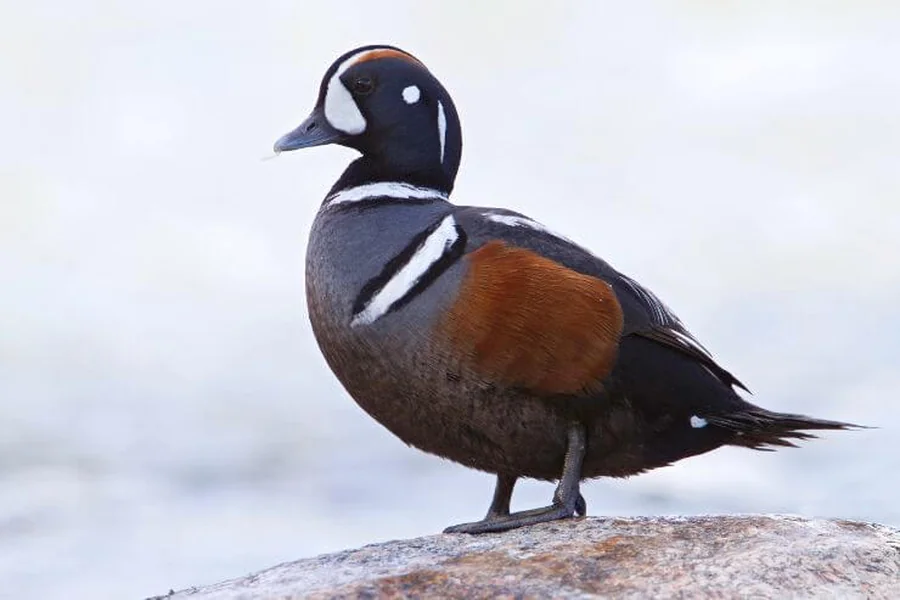
Mallard Duck of Maine: Facts, Habitat, and Identification
The mallard does not require open water like sea ducks do, but prefers shallow, calm areas near the water’s edge. Feeds by tipping up in the water and reaching plants and small insects close to the bottom. In fact, the way mallards feed is different from diving ducks, as it’s called dabbling.
Mallards lay their eggs on the ground near water, and many are found in tall grass. A female can lay up to a dozen eggs in one clutch. Ducklings hatch preempted to swim within a few hours. Maine is teaming with mallards in late June, frozen rivers in January, and over-crowded ponds in July. Mallards are the easiest duck to observe close-up as they are very tolerant of humans.
Scientific Classification of Ducks in Maine
| Rank | Classification |
| Kingdom | Animalia |
| Phylum | Chordata |
| Class | Aves |
| Order | Anseriformes |
| Family | Anatidae |
| Subfamily (dabbling ducks) | Anatinae |
| Subfamily (mergansers) | Merginae |
| Common genera in Maine | Anas, Aythya, Bucephala, Mergus, Somateria, Clangula |
Native Ducks of Maine You Should Know
American Black Duck
The American Black Duck is a darker cousin of the mallard and may be mixed with mallards in the same ponds. It is deep brown in colour with a pale grey head. When in flight, a purple flash is visible on the wing. This duck has a preference for quiet coastal marshes, tidal flats. Numbers have declined in recent years as a result of habitat loss, and competition from mallards. Maine is one of the remaining areas of stronghold in the eastern United States for this species. The decline of black ducks is an important concern for wildlife agencies. The bird eats water plants, snails and small fishes in shallow waters. Nests are low in the canopy, typically close to close canopy. This species is a fall bird and a frequent fall watcher for birders, watching for it in Maine’s large wintering population along the Atlantic coast. It is more shy than a mallard and thus less approachable. The primary tool for maintaining a viable population of Maine’s native duck in the years ahead will be the protection of coastal wetlands.
Wood Duck
The Wood Duck is one of the most colorful of North American ducks. Males are green and purple on the head with prominent white stripes, and have red eyes. Females are gray brown and have a white patch around the eye. Wood ducks lay their eggs in tree holes, often away from water, unlike most ducks. Once hatched, ducklings do not crawl from the nest to the ground, but jump. It thrives in the mix of trees and water provided in beaver ponds, swamps and slow river banks throughout Maine. Wood ducks feed on acorns, seeds and insects on the water’s surface. They have sharp claws that enable them to grip the bark and stand on branches—unusual for a duck. The population has gradually increased throughout the state with nest boxes being placed near the wetlands. The wood duck’s high squeal is heard before it is seen by birders, as it is a quick flusher. One is most likely to be seen early in the morning resting quietly near the shoreline.
Common Eider
The Common Eider is the state bird of Maine. The nests are on rocky islands along the coast, particularly near Muscongus Bay and Penobscot Bay, and are large colonies. Males are boldly patterned black and white, and have a pale green patch on the neck. Females are brown, with fine barring, to camouflage them against the rocks. Eiders plunge under water for mussels, clams and other shellfish, crushing shells with their powerful bills. The nests of females are lined with soft down feathers from their own breast that were previously commercially harvested for bedding. The young birds form thick clusters, which are cared for by a few adult females and fed by other adult females. Maine boasts one of the largest eider populations on the Atlantic coast, and boat tours around the islands offer closeup views during the breeding season. In winter, even more birds are seen, due to the influx of eiders from more to the north, as well as the resident birds of Maine, which flock to the open sea shoreline. This species is not disturbed by cold water as thick down will maintain warmth throughout the severest winter.
Hooded Merganser
Hooded Merganser is a small, sharp duck that dives in ponds and slow streams. During the breeding display a male fan-shaped crest is black and white and a female’s fan-shaped crest is reddish but not as noticeable. An underwater predator, it hunts small fish, crayfish and aquatic insects. It has a narrow, serrated bill which it uses to easily hold slippery prey. The hooded merganser, like the wood duck, nests in tree holes and is drawn to nest boxes set up close to water. Within a day after hatching, ducklings follow their mother to the water, where they leave the nest. It is present in good numbers in wooded wetlands throughout Maine, particularly in the southern and central third of the state. Hooded mergansers are not commonly found in flocks, but rather in small groups. They are easy to identify from larger ducks once you know what to look for as they fly fast and directly and have a small body. The best opportunities for viewing are during the fall and winter on open water.
Ring-necked Duck
The Ring-necked Duck is named for the faint chestnut neck band which is difficult to see in the field. The more tell-tale sign is the white ring around the tip of the bill that is very conspicuous on the water. The males are black with a peaked head and gray sides. Females are brown with a light face patch. This species does not occur in the open coast but in freshwater ponds, bogs and small lakes. In water, shallower than that used by other diving ducks, it searches for seeds, roots and aquatic insects. Ring-necked ducks migrate through Maine in spring and fall with some remaining to breed in the northern region of the state. Groups may lie on the water, resting in the day, and feed at dawn or dusk. Birders search for the peaked head and the ring on the bill — if either of these is lacking, it can be tricky to find the other.
Why Maine Has So Many Duck Species
Maine’s combination of coastlines, lakes, rivers and forest wetlands provides ducks almost all of the habitats that they require in one state. Some species migrate south in cold winters, others migrate here from the north in the summer. It’s this overlap of resident, migrant and wintering birds that gives Maine a long list of ducks for the calendar year.
Migratory Ducks in Maine
Blue-winged Teal
The Blue-winged Teal is an early fall migrant and a late spring duck. In flight males have a pale blue wing patch, and in front of the eye have a white crescent. The female is plain brown, like other female dabbling ducks. A small duck found feeding on seeds and small invertebrates close to the surface in shallow marshes and flooded fields. Blue-winged teal breed in isolated wetlands throughout Maine in much smaller numbers than found in prairie areas further west. Mating occurs rapidly during the spring season and nests are built in grass, near water. The early migration of this species makes it all too easy to confuse large flocks in migration which may appear as early as late August before most other ducks start their southward flight. It is fun to watch when migrating because of its rapid and agile flight and close flocking. This teal has small breeding populations, and projects have been undertaken in wetlands throughout the state to preserve these populations.
Green-winged Teal
Green-winged Teal is the smallest of the dabbling ducks in Maine. Males’ chestnut head is covered with a green bar behind the eye and a white stripe down the side. Females are brown, and can be mistaken for other small ducks unless size is a clue. This species prefers shallow ponds, fields that are periodically flooded and margins of marshes, where it eats seeds and plant material. Green-winged teal are migratory birds that pass through Maine in the spring and fall migration periods, but are most numerous in fall. Flocks fly in tight, fast groups and are able to turn together in unison, which makes them easy to spot, even from a distance. Some birds will pass through rapidly, others may stay weeks if food and water are available. Unlike many small ducks, this teal is more hardy and has been seen as late as the fall along the rivers and coastal marshes of Maine, before the real freeze.
Northern Pintail
Northern Pintail is a tall slender duck with a long, pointed tail that is characteristic of the species. Male is brown on the head, white on the neck stripe and gray on the body. The females are mottled brown, with a less pronounced tail point. Pintails favor areas of open wetlands, flooded fields and shallow bays instead of high marsh areas. They feed by ‘dabbling’ at the surface or by tipping over to reach plant material and seeds just below the water. This species generally migrates through Maine in spring and fall with some numbers lingering through mild winters along the coast. Pintails move in flocks with a relatively free flight and their long necks and tails allow them to be identified even when they are in flight. Migrating pintails stop by the farm fields and coastal flats for feeding. The populations have decreased over the past few decades in North America, and it’s a highlight for birders to spot a Maine bird on their annual migration counts.
American Wigeon
Equally distinctive is the American Wigeon, whose round head is short, and has a bold white patch on the forehead in males. There is a green stripe that runs backwards from the eye. The females have a plain head and are grayish brown. Wigeons are more on land than other dabbling ducks, and like geese, feed on grasses and plants in the nearby vicinity of the water’s edge. This species will also pick up food off diving ducks and coots while they are coming up from the water. During the migration season, American wigeons fly through Maine, and some winter along the coast where the water remains open. They are grouped together with other dabbling ducks on ponds, bays, and flooded fields. They have a whistling call that can be heard by humans before sighting them. Wigeons enjoy the combination of water and land that is provided by grassy shorelines and shallow bays while they are in Maine.
Bufflehead
One of the smallest diving ducks in North America, the Bufflehead is a favorite among Maine birders for its bold black and white pattern. The males have a large white patch on the back of a dark, shiny head. They are gray brown with a small white cheek patch, and the females are smaller. This species hunts down water for aquatic insects and small crustaceans in ponds, bays and coastal waters. Most Maine occurrences of Buffleheads are of migrating or wintering birds as opposed to breeders, although nest holes in tree cavities are being used by them. Flocks come in the fall, and stay through the winter as long as water is available, and heads north again in the spring. They’re fun to watch from the shore as they dive and pop up all of a sudden. The buffleheads’ small size and rapid wingbeats can be distinguishing features when compared to larger diving ducks sharing the same water. There are many safe places to view these birds along the Maine coast, such as harbors, coves, and calm bays, during the colder months.
Long-tailed Duck
The Long-Tailed Duck is a cold and open water sea duck and Maine’s winter looking coastline is very fitting for this species. The seasons change with males sporting mostly dark feathers, mostly white feathers with long thin tail feathers. The females don’t have a long tail, but have the same bicoloured blocky appearance. This fish dives deeply, sometimes over fifty feet, to hunt down the small mollusks and crustaceans that it hunts on the ocean floor. Long-tailed ducks are Arctic breeding birds that only come down to Maine during the non-breeding season, in late fall and winter. They can be heard over open water, and the call can be used to determine the species before sighting it. Long-tailed ducks form rafts of birds, frequently intermingled with scoters and eiders, offshore near rocky points and open bays. This is the best time to scan open water looking for this hardy winter duck, as cold snaps drive other ducks to shore.
How Migratory Ducks Depend on Maine’s Wetlands
Migratory ducks use Maine’s coastline and wetlands as a stopover during their migration between their northern breeding grounds and their southern wintering grounds. These birds are in search of food and cover on a tough trip to and from their destinations. Conserving these stopover habitats ensures a year-round migration pathway for those species that rely on Maine annually.
Ducks of Southern Maine
Southern Maine offers one of the easiest regions in the state for spotting ducks, thanks to its mix of tidal marshes, sandy coastline, and inland ponds. Casco Bay, Scarborough Marsh, and the Kennebunk area all draw large numbers of ducks throughout the year. Visitors exploring this region can expect to see mallards, American black ducks, buffleheads, and wintering long-tailed ducks depending on the season.
Scarborough Marsh alone supports one of the largest tidal wetland systems in Maine, giving dabbling ducks and diving ducks room to share the same habitat. Inland ponds near Portland attract wood ducks and hooded mergansers, especially in spring and fall.
Common Ducks Found Along Casco Bay
Casco Bay hosts a steady mix of species across the seasons. Birders regularly spot common eiders, buffleheads, mallards, and American black ducks feeding along the shoreline and rocky islands. Winter brings larger numbers as northern ducks join the resident population.
Best Duck Watching Spots in Southern Maine
Scarborough Marsh, the Eastern Promenade in Portland, and the Kennebunk Plains area rank among the top spots for duck watching in southern Maine. Early morning visits during fall migration typically produce the widest variety of species in a single outing.
Ducks of Midcoast and Downeast Maine
The Ducks of Midcoast and Downeast Maine include some of the state’s largest eider colonies and the best sea duck viewing anywhere on the coast. Rocky islands near Muscongus Bay and Penobscot Bay shelter breeding eiders each summer, while winter draws long-tailed ducks and scoters closer to shore.
Acadia National Park adds freshwater ponds to the mix, supporting wood ducks, mallards, and ring-necked ducks alongside the coastal species found just a few miles away. This blend of rocky coast and quiet forest ponds makes the Midcoast one of the most varied regions in Maine for duck diversity.
Ducks of the Lakes Region, Western Maine
Western Maine’s lakes, including Sebago Lake, provide calm freshwater habitat for dabbling and diving ducks alike. Wood ducks nest in the surrounding forest, while ring-necked ducks and hooded mergansers use the open water during migration.
Beaver ponds scattered through the region create additional pockets of habitat that smaller duck species rely on for nesting and feeding. Fall migration brings a noticeable increase in duck numbers as birds move south along inland flyways through this part of the state.
Ducks of Northern Maine and Aroostook County
The Ducks of Northern Maine and Aroostook County include species that breed farther north than anywhere else in the state. Ring-necked ducks and some blue-winged teal nest in this region’s scattered wetlands and slow-moving rivers.
Cold winters push most ducks south long before the rivers freeze, so this region sees its highest duck activity during spring and summer breeding season rather than winter.
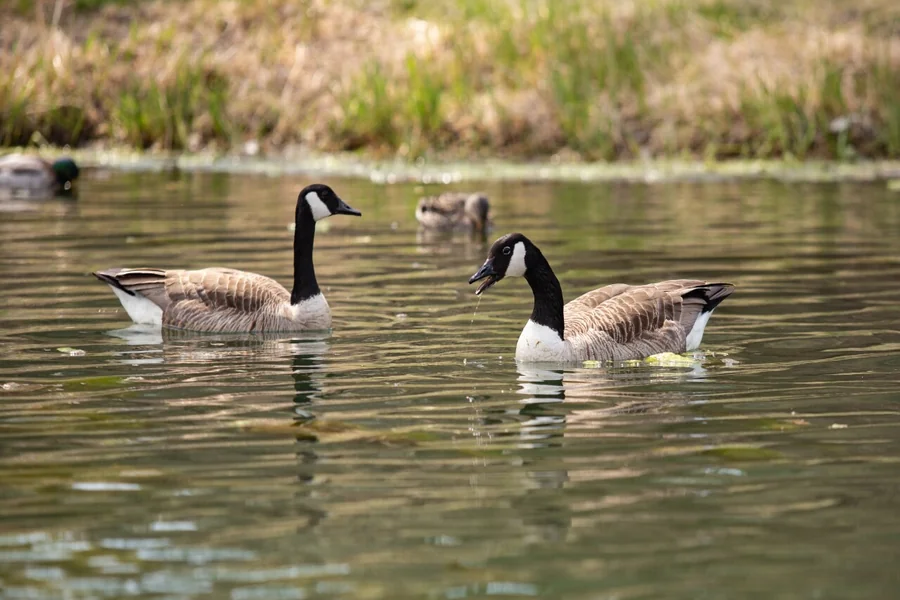
Common Ducks of Maine by Color
| Color | Common Species |
| Green head | Mallard |
| Black and white | Bufflehead, Common Eider (male), Long-tailed Duck |
| Brown | American Black Duck, female dabbling ducks |
| Colorful mix | Wood Duck |
| Chestnut and gray | Ring-necked Duck, Northern Pintail |
Habitat Map: Where to Find Ducks in Maine by Region
| Region | Habitat Type | Key Species |
| Southern Maine Coast | Tidal marsh, sandy shore | Mallard, Black Duck, Bufflehead |
| Midcoast and Downeast | Rocky islands, open ocean | Common Eider, Long-tailed Duck, Scoters |
| Lakes Region, Western Maine | Freshwater lakes, beaver ponds | Wood Duck, Ring-necked Duck, Hooded Merganser |
| Northern Maine, Aroostook | Rivers, remote wetlands | Ring-necked Duck, Blue-winged Teal |
Best Places for Duck Watching in Maine
Coastal areas that are close to marsh and freshwater areas are best for duck watching in Maine. Several areas, such as Scarborough Marsh, Merrymeeting Bay, Acadia National Park, and Sebago Lake are good places to catch the attention of a variety of species in one trip.
Fall migration typically provides the most variety because resident ducks intermingle with those migrating from further north. Sea ducks that are rarely seen this close to shore in any other season grace the coast during the winter season.
Interesting Duck Facts You Probably Didn’t Know
| Fact | Detail |
| Fastest diver | Long-tailed ducks can dive deeper than 50 feet for food |
| Tree nesters | Wood ducks and hooded mergansers both nest in tree cavities |
| Down feathers | Eider down was once collected commercially for bedding |
| Early migrant | Blue-winged teal often leave Maine before most other ducks arrive |
| Largest colonies | Maine hosts some of the largest common eider colonies on the Atlantic coast |
Conclusion
Ducks in Maine show just how much variety one state can hold. Each of these species has a unique niche in Maine’s wetlands and shorelines.The mallard inhabits a city pond, the eider rides the waves off a rocky island, and each species has a niche on Maine’s wetlands and shorelines. Some remain throughout the year, some fly through for a couple of weeks, and some only do so when the water further north freezes over.
Learning more about these species will provide you with more motivation to explore ducking maine winter marshes, lakes and shorelines year-round. Maintaining habitats that these ducks rely on—whether tidal marsh, quiet beaver ponds or something as simple as an old agricultural field—preserves this diversity for seasons to come.
FAQs:
What is the most common duck in Maine?
The mallard is the most common duck in Maine, found year-round on ponds, rivers & marshes across the state.
How many duck species live in Maine?
Maine hosts around 20 regularly occurring duck species, including residents, migrants & winter visitors.
What is the best time of year for duck watching in Maine?
Fall migration, from late September through November, offers the widest variety of duck species in Maine.
Where can you see the most ducks in Maine?
Scarborough Marsh, Merrymeeting Bay, Acadia National Park & Sebago Lake are the top spots for duck watching in Maine.
Do any ducks stay in Maine all winter?
Yes, sea ducks such as the common eider and long-tailed duck stay along Maine’s coast all winter where the water stays open.

Welcome to birdsfocus! I’m Anam Sattar, an AI Powered SEO, and Content Writer with 4 years of experirnce.
I help websites rank higher,grow traffic, and look amazing. My goal is to make SEO and web design simple and effective for everyone.
Let’s achieve more together!