


A picture circulates every couple of months of a cardinal in blue.A picture circulates every couple of months of a cardinal in blue. It’s filmed in someone’s back yard, posted on a Facebook group, and by the time it’s the next day, thousands of people are asking me the same question. Is it true that the blue cardinal is real or is there something else here?
The answer is NO, there is no documented population of blue Northern Cardinals in North America. Then there’s the longer answer, and the one you should read: There’s science behind why this myth has never gone away, a few cases of true color mutations in cardinals, and a few look-alikes that account for nearly every picture you’ve ever seen. Here it goes, from the biology of the bird to helpful tips for identification; you will be able to tell what you are looking at the next time a “blue cardinal” appears in your feed.
What Is a Blue Cardinal?
A cardinal in blue plumage instead of the typical red or brown is called a “blue cardinal.” It’s not even been given a scientific name, as none have been seen in the wild by any wildlife agency, museum specimen or ornithology journal. All North American cardinals are in a small, well documented list and not one of them naturally possesses blue feathers.
Where are all these photos from? The vast majority from three sources: lighting effects that fool the camera’s sensor, birds which appear to be cardinals when viewed superficially, and, more recently, photos that are not authentic at all. A few are of a true pigment defect in a normal Northern Cardinal. Let’s discuss each of these, but first, the bird that everyone means when they say “blue cardinal.
Scientific Classification
Because there’s no separate species behind this name, the table below covers the Northern Cardinal, the bird at the center of nearly every blue cardinal report.
| Classification | Details |
| Scientific Name | Cardinalis cardinalis |
| Family | Cardinalidae |
| Order | Passeriformes |
| Genus | Cardinalis |
| Common Names | Northern Cardinal, Redbird, Common Cardinal |
| Conservation Status | Least Concern (IUCN) |
Is a Blue Cardinal Real?
Not as a breeding population as wild, no. That’s the consensus that most ornithologists agree on almost unanimously. Sometimes, however, it is a cardinal that is duller than usual, patchy or unusually white with a strange appearance when photographed under artificial light or the automatic white balance function of a cell phone camera. It may not be blue, but in a misty image, it’s close enough to start a rumour.
Since red and blue are made very differently, you need a little knowledge of the workings of bird color to understand why this is so.
The Science of Feather Color
The red colour of a cardinal is made up of carotenoid pigments, which a bird cannot produce naturally. It obtains the color from the food, primarily its berries and seeds, and then dyes the new feathers as they form. Reducing the food, increasing the brightness. Lack of proper nutritional maintenance at molting time, paler color. This is well documented, and can be easily seen in captive birds when fed different diets.
There’s an exception to that, and this is something that will not be covered in most viral posts—blue works differently. Pigment production is not a characteristic of any North American songbird. However, other birds such as the Blue Jay possess tiny structures within each feather barb, which cause the light to physically scatter, similar to the scattering of light that makes the sky blue. It’s not paint, it’s physics! When the structure is broken, the blue disappears, although nothing has been chemically changed.
Why True Blue Feathers Are Rare
Cardinals have never evolved that light-scattering feather structure. Their whole color system runs on carotenoids, and carotenoids simply don’t produce blue in birds, full stop. That’s the core reason experts stay confident a truly blue cardinal isn’t hiding out there waiting to be photographed properly. Sun bleaching, feather wear, and poor nutrition can absolutely shift a cardinal’s red toward orange, tan, or a washed out pink. None of those paths lead to blue.
Genetic Mutations in Cardinals
That doesn’t mean cardinals never show unusual color. Leucism reduces pigment across some or all of a bird’s feathers, leaving pale patches or an almost white bird in extreme cases. Xanthochroism does something more specific: it shifts the red pigment pathway toward yellow instead, and this is exactly what produces the yellow cardinals that occasionally make real news, complete with verified photos from wildlife biologists. Notice the difference. Yellow cardinals have documentation. Blue ones don’t, because the biology for one exists and the biology for the other doesn’t.
Blue Cardinal Identification
Get rid of color, for a minute, and begin with shape, it does not deceive you like lighting does. Cardinals are stocky with a thick, cone-shaped beak used for breaking hard seeds and a pointed crest, and have a round-bodied shape. Those three features remain the same regardless of how colored a picture seems to be of a bird, and they are the quickest method of ruling a bird in or out.
Once the shape is confirmed to be right, color is informative information and not the whole story. A warm red color with plain daylight is a sure sign of a standard Northern Cardinal. If you’re considering a new discovery, a blue tint, particularly a tint that appears too uniform or too colorful, is a good sign to take another look.
Read Also: Blue Gray Tanager Bird
Physical Appearance
Adult Northern Cardinals are 21-23cm long, with a wingspan of 25-31cm. Males have bright red feathers with a black mask around the face and beak. Overall, a warm brown color with reddish wing tips, crests and tails. Both male and female exhibit the same definite crest and beak like a Traffic Cone.
Any photo that includes a true blue body, a black face mask and a cardinal’s crest should be treated with suspicion. It’s one of the most obvious features of a photo that has been manipulated or created by a computer, and this combination has never appeared in a wild bird.
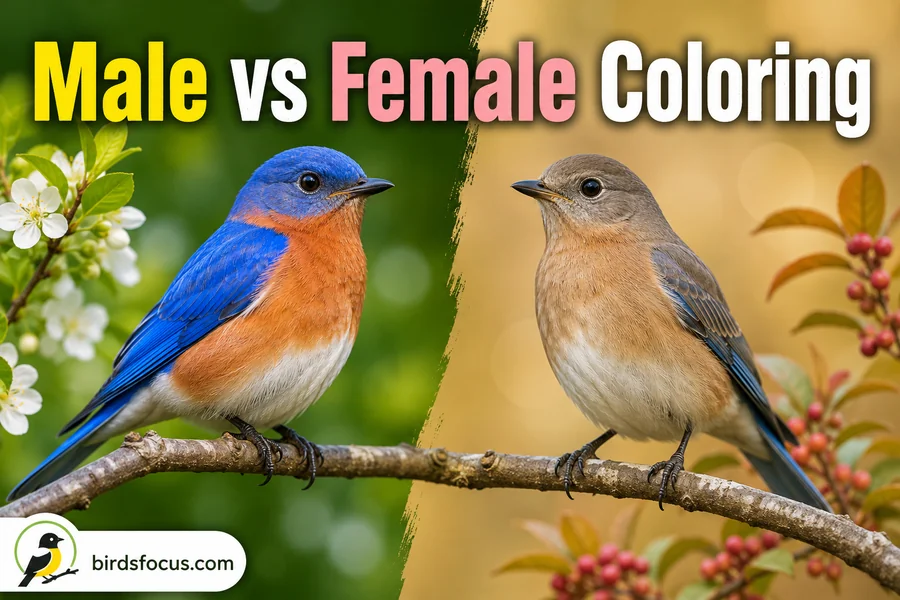
Male vs Female Coloring
| Feature | Male | Female |
| Body Color | Bright red | Warm brown with red tinges |
| Face Mask | Black | Grayish |
| Beak | Bright orange-red | Orange-red |
| Voice | Louder, more frequent | Softer, less frequent |
Juvenile Cardinal Coloring
Young cardinals look almost nothing like their parents at first. Fledglings show dull grayish-brown feathers and a dark, almost black beak that only turns orange-red as they mature over several months. This drab juvenile stage is another common source of misidentification, since a young bird’s muted coloring photographs oddly and sometimes reads as gray-blue in low light, especially in shade.
Birds Often Mistaken for a Blue Cardinal
Much of the “blue cardinal” literature has a perfectly mundane explanation right before their eyes: another bird altogether. There are a few common backyard birds with a few similar characteristics, but not quite enough to cause a double take, to make them cardinals.
Blue Jay
The Blue Jay is by far the most common culprit. Real structural blue feathers and a loud call to hear across a yard, and a prominent crest which covers most of the boxes people tick when they say “blue cardinal”. To ID it, check for the black necklace around its neck and white markings on its wings and tail. They both don’t appear on any cardinal either.
Blue Grosbeak
A bit of the confusion was the deep blue color of the Blue Grosbeak’s plumage in the male, and the thick beak, like a cardinal’s, with which he cracks open seeds. It has no crest at all, however, and its chestnut colored wing bars, once you know where to look—are a great identifier.
Indigo Bunting
During the breeding season Male Indigo Buntings become a deep, almost electric blue, which is so vibrant that it will stop traffic. Their small round head and complete absence of a crest distinguish them from a cardinal in an instant, when they are found.
Eastern Bluebird
The Eastern Bluebird has a soft sky blue back and warm rust orange breast. It’s a slender and gentle construction that doesn’t really resemble a cardinal next to it in the same photo – but if you look at it through a window at dusk, it looks more like a cardinal than you think.
Read Also: Hooded Oriole Bird
Blue Cardinal Habitat and Distribution
Native Range of the Northern Cardinal
The Northern Cardinal naturally lives across the eastern and central United States, dipping down into parts of Mexico and Central America. It’s one of the more familiar backyard birds for a huge stretch of the continent, which is exactly why so many people feel qualified to spot something unusual about one.
Preferred Habitat
Cardinals gravitate toward dense shrubs, woodland edges, hedgerows, and yards with thick cover close by. This preference doesn’t shift based on feather color. A cardinal with unusual pigmentation still wants the same tangled bush to hide in as every other cardinal on the block.
Range Expansion Over Time
Cardinals were not always so prevalent. The species has advanced steadily northward over the last century, aided by milder winters that improve its survival in areas that were previously very inhospitable to the species, as well as by backyard bird feeders. The more people move to where the cardinals are, the more they will be seen, and the more they will be photographed, and the more they’ll be photographed the more there will be a sighting of an odd-looking cardinal that goes viral.
Blue Cardinal Behavior and Lifestyle
Daily Routine
Cardinals feed hardest at dawn and again at dusk, resting through the hottest stretch of the day. This rhythm holds steady across the species no matter what an individual bird’s coloring looks like.
Feeding Habits
They forage low, often right on the ground or in the bottom branches of a shrub, cracking seeds open with that heavy beak rather than picking at soft fruit the way some songbirds do. A rare pigment variant doesn’t change any of this behavior.
Social Behavior
Cardinals typically pair up for breeding season and loosen into small, informal groups over winter. Pairs often stick together across multiple seasons, and you’ll frequently spot a male and female foraging within a few feet of each other.
Territorial Nature
Males defend their patch aggressively with loud, repeated song, and they’re famous for attacking their own reflection in windows and car mirrors, apparently convinced a rival has moved in.
Blue Cardinal Call and Sound
What Does a Cardinal Sound Like?
Cardinals sing a series of clear, whistled phrases, often rendered as “cheer, cheer, cheer” or “birdy, birdy, birdy.” What’s unusual about this species is that both sexes sing, not just the males, which sets cardinals apart from most North American songbirds.
Why Do Cardinals Sing?
Song defends territory, keeps a pair connected across a yard or through dense brush, and helps attract a mate in the first place. None of that changes for a bird with an unusual feather condition. The voice stays the same even when the color doesn’t match expectations.
Diet and Feeding Habits
Natural Diet
Wild cardinals feed on a variety of seeds, grains, fruit and berries, but during the breeding season when they are rapidly growing chicks they incorporate insects into their diet to satisfy their protein requirements.
Favorite Foods
Sunflower seeds are the favorite seed at nearly all backyard feeders, followed closely by safflower, cracked corn and native shrub berries.
Feeding Backyard Cardinals
Avoid using a tube feeder. Cardinals don’t like anything that requires them to hang onto a perch like a sucker cup feeder because their body shape and feeding habits don’t match. Fresh water set out nearby can be effective to noticeably increase visits particularly during hot summer periods.
Breeding and Reproduction
Mating Season
Breeding runs from March through September across most of the cardinal’s range, and pairs often squeeze in two or three broods within that single stretch.
Courtship Behavior
Males court females with a small offering, usually a seed, passed beak to beak. It’s a small, almost tender gesture, and it’s one of the easiest cardinal behaviors to catch on camera in early spring if you’re patient.
Nest Building
The female does almost all the construction, weaving a cup-shaped nest from twigs, strips of bark, and grass. She usually tucks it inside dense shrubs, one to three meters off the ground, well hidden from casual view.
Egg Laying
| Breeding Detail | Information |
| Clutch Size | 2–5 eggs |
| Egg Color | Pale green or blue-white with brown speckles |
| Nest Type | Open cup |
| Incubation Period | 11–13 days |
| Parents Involved | Mostly female incubates, both feed chicks |
Raising Chicks
Chicks hatch blind, featherless, and completely helpless, depending entirely on both parents for food. They leave the nest after just 9 to 11 days, though the male often keeps feeding them for weeks afterward while the female starts a second clutch.
Cardinal Lifespan and Health
Wild Northern Cardinals typically live 3 to 5 years, though banded individuals have been recorded surviving well past a decade under good conditions. Predation, harsh winters, and window strikes account for most early deaths in the wild.
Blue Cardinal Sightings and Reports
Are the Viral Photos Real?
Nearly all are subject to failure on examination. Follow them back, and you will discover either a manipulated photo, an AI-generated image or a true identity of a Blue Jay or Blue Grosbeak. A wild blue Northern Cardinal has never been seen in a photo by a verified and unaltered wildlife agency, university ornithology department or major birding database. Not one.
How AI Images Made This Worse
In the last few years, the problem has been exacerbated by the use of image-generating tools. In seconds, a set of prompts such as “blue cardinal bird” yields a convincing, detailed image with the appropriate crest, the appropriate shape beak — except the biological plausibility is missing. These pictures proliferate quickly just because they appear real, and most users don’t have a simple way to verify this on their phone’s screen.
How to Verify a Sighting
If you are sure that you have seen a rare color variety, take a picture of it while it is in daylight, not through a window, and not with strong filters. Obtain a good view of the beak and the crest. Then report it to a local birding group or post it to eBird where knowledgeable users can have a much greater impact than any comment section.
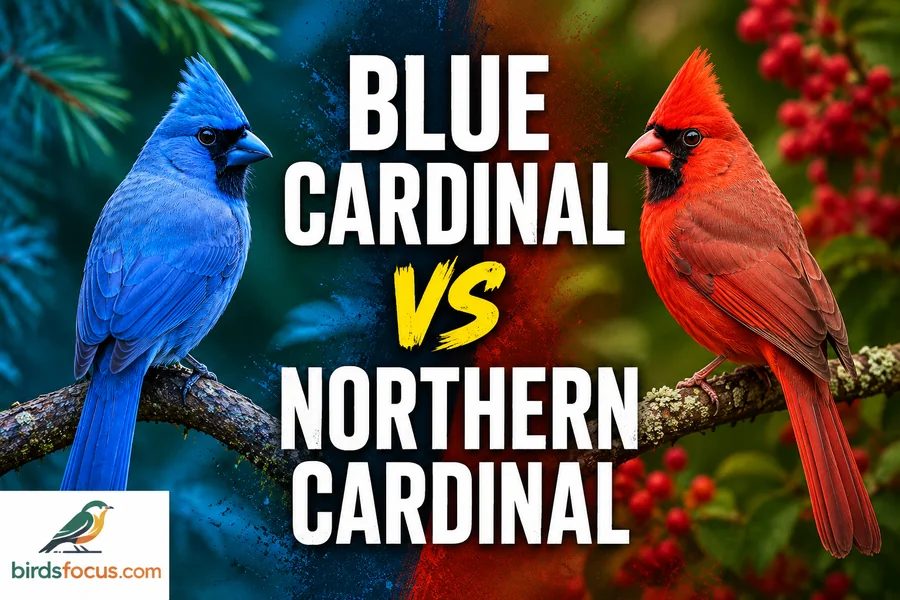
Blue Cardinal vs Northern Cardinal
| Feature | “Blue Cardinal” (Reported) | Northern Cardinal (Confirmed) |
| Scientific Status | Not a recognized species | Cardinalis cardinalis |
| Color Source | Unverified, likely edited or misidentified | Carotenoid pigment from diet |
| Documented Sightings | None verified | Millions across North America |
| Habitat | N/A | Shrubs, woodland edges, gardens |
| Most Likely Explanation | Blue Jay, Blue Grosbeak, or edited photo | Standard wild cardinal |
Cardinal Predators and Threats
Natural Predators
Hawks, snakes, domestic cats, and squirrels all prey on cardinal eggs and chicks, and adults caught feeding low to the ground aren’t entirely safe either.
Human Threats
Window collisions, habitat loss from development, and pesticide use that reduces available insects and seeds all take a toll in suburban and urban areas.
Conservation Status
The Northern Cardinal carries a Least Concern rating from the IUCN, backed by a large, stable population spread across its entire range.
Read More: 15 Asian Birds
Interesting Blue Cardinal Facts
| Fact | Details |
| True Blue Cardinal Confirmed? | No, never verified by ornithologists |
| Species Most Confused With | Blue Jay |
| Real Color Variant That Exists | Yellow Cardinal (xanthochroism) |
| Why Cardinals Turn Red | Carotenoid pigments from diet |
| Why Cardinals Can’t Turn Blue | No structural feather color mechanism |
| State Bird Status | Official bird of 7 U.S. states |
| Female Cardinals Sing Too | Yes, unlike most North American songbirds |
| Nickname | Redbird |
Here’s the detail that trips most people up the first time they hear it: the exact feather trick that gives Blue Jays their color is simply absent in cardinal feathers. Diet can nudge a cardinal toward orange, tan, or a faded yellow-pink, but blue isn’t on the menu no matter how rare the mutation gets.
And here’s the twist that keeps the myth alive: yellow cardinals are real, rare, and photographed. That confirmed rarity is exactly what fuels hope that a blue version must be out there too, somewhere, waiting. Biology just doesn’t cooperate.
Conclusion
The blue cardinal is one of the internet’s more stubborn bird myths, kept alive by viral photos rather than anything a field biologist has actually logged. Red comes from diet-based pigment. Blue comes from a feather structure cardinals never evolved. Once you know that, most of the mystery evaporates, and what’s left is a much more interesting question: was that photo a Blue Jay, a Blue Grosbeak, an AI image, or just a cardinal caught in strange light? Chances are good it’s one of those four. The real Northern Cardinal, loud song, loyal pairs, and all, is remarkable enough without needing a blue version to make the story land.
FAQs:
1. The blue cardinals, are they real or a myth?
No confirmed blue Northern Cardinal exists in the wild. Most photos trace back to edited images, AI-generated content, or a misidentified Blue Jay.
2. What bird gets mistaken for a blue cardinal most often?
The Blue Jay causes the most confusion, thanks to its crest, blue color, and frequent backyard visits, even though its body shape and markings differ from a cardinal’s.
3. Can a cardinal’s color change to blue?
No. Cardinal feathers depend on carotenoid pigment from diet, and that pigment pathway can’t produce true blue under any known condition.
4. Do any real cardinal color mutations exist?
Yes. Yellow cardinals occur through a rare genetic condition called xanthochroism, and this variant has verified photographic documentation from wildlife biologists.
5. What should I do if I photograph an unusual colored cardinal?
Shoot it in natural daylight, get a clear angle on the beak and crest, and submit it to a birding platform like eBird so experienced reviewers can weigh in.

Welcome to birdsfocus! I’m Anam Sattar, an AI Powered SEO, and Content Writer with 4 years of experirnce.
I help websites rank higher,grow traffic, and look amazing. My goal is to make SEO and web design simple and effective for everyone.
Let’s achieve more together!