


The Junco Bird is a charming North American songbird that captures the attention of birdwatchers with its simple beauty and gentle nature. Easily recognized by its white belly, dark upperparts, and flashing tail feathers, this bird is a common sight in forests, parks, and backyard gardens, especially during winter.
Whether you want to improve your bird identification skills, learn about a Junco Bird nest, understand its correct pronunciation, or discover why it is called a snowbird, this guide covers it all. You’ll also explore its habitat, diet, behavior, migration, and white outer tail feathers, making it easier to identify and appreciate this fascinating backyard bird throughout the year.
What Is a Junco Bird?
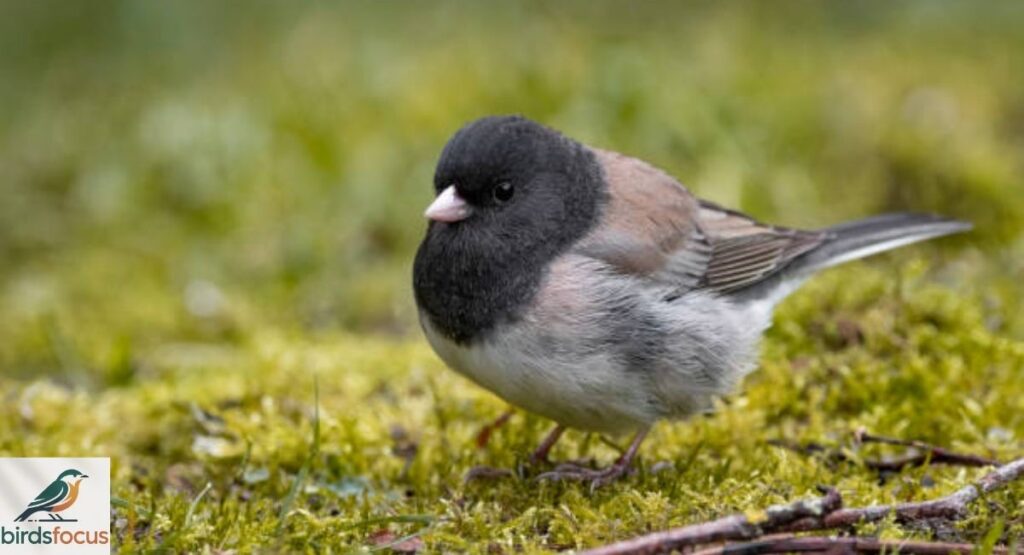
The Junco Bird is a small North American songbird that belongs to the sparrow family. Although many people simply call it a junco, the best-known species is the Dark-eyed Junco. It thrives in cool forests and mountain landscapes during summer before moving into neighborhoods, parks, and gardens each winter. Its calm personality and active ground-feeding habits make it one of the easiest backyard birds to observe.
Many birdwatchers call the Junco Bird a sign that winter has arrived. Unlike colorful tropical birds, juncos rely on simple gray, black, brown, and white feathers for camouflage. Their adaptability allows them to survive harsh weather across much of the United States and Canada. Today, millions of people enjoy watching these cheerful winter songbirds forage beneath trees and bird feeders.
Scientific Classification
Scientists classify the Junco Bird as Junco hyemalis, a member of the Passerellidae family. This family includes many New World sparrows that share similar feeding habits and body shapes. The name hyemalis means “of winter,” which perfectly matches the bird’s seasonal appearance across much of the United States.
| Classification | Details |
| Common Name | Junco Bird |
| Scientific Name | Junco hyemalis |
| Family | Passerellidae |
| Order | Passeriformes |
| Class | Aves |
| Kingdom | Animalia |
| Conservation Status | Least Concern |
Physical Appearance
At first glance, the Junco Bird looks simple. A closer look reveals beautiful details. Most adults have a dark hood, a pale pink bill, bright eyes, and clean white feathers beneath the body. During flight, their flashing white outer tail feathers become one of the easiest identification features. Different regional forms display shades of gray, brown, black, and rusty red while keeping the same graceful shape.
Size, Weight, and Wingspan
Although small, the Junco Bird is surprisingly agile. Most adults measure between 5 and 7 inches in length. Their wingspan ranges from 7 to 10 inches, while body weight usually falls between 18 and 30 grams. This lightweight build allows quick takeoffs, fast ground movement, and efficient seasonal migration over long distances.
| Feature | Average Measurement |
| Length | 5–7 inches |
| Weight | 18–30 grams |
| Wingspan | 7–10 inches |
| Lifespan | Up to 11 years |
Male vs Female Junco Bird
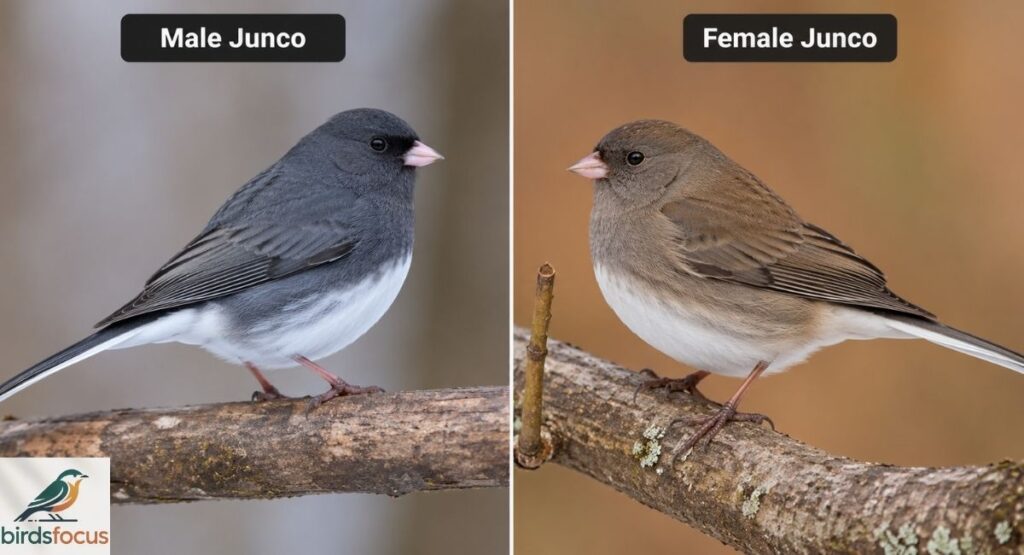
Male and female juncos look similar, yet careful observation reveals several differences. Males usually display darker heads, richer feather colors, and sharper body markings. Females often appear softer with lighter gray or brown plumage that helps them stay hidden while nesting. Young birds resemble females until they develop adult feathers after their first molt.
Experienced birdwatchers also notice behavioral differences during breeding season. Males sing more often and defend territories against rivals. Females spend more time selecting nest sites, incubating eggs, and caring for chicks. Together, they form a strong partnership that helps young juncos survive their first weeks in the wild.
How to Identify a Junco Bird
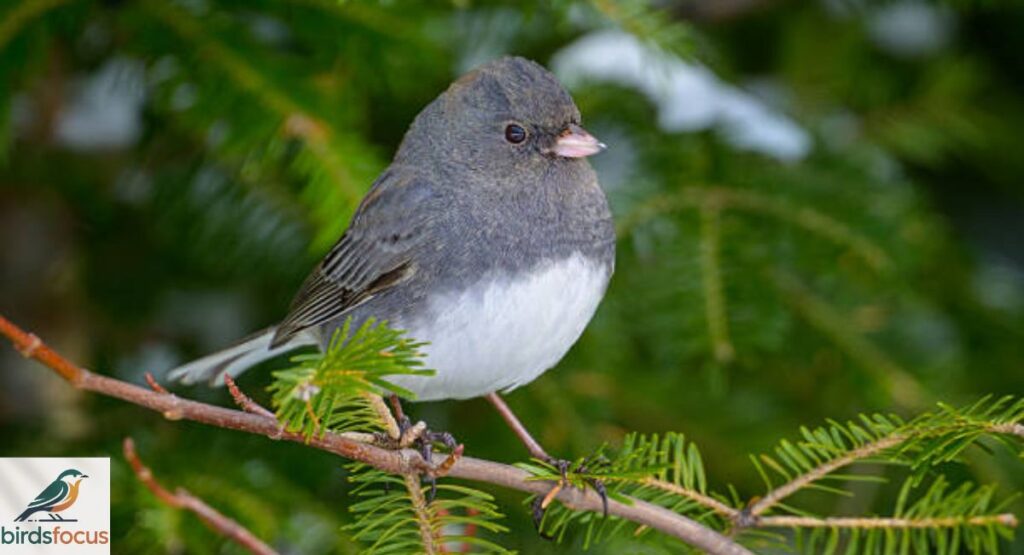
Learning to identify a Junco Bird is easier than many beginners expect. Although several subspecies exist, they all share a compact body, a rounded head, and a long tail with bright white outer feathers. Their simple colors may seem ordinary at first. However, once you know the key field marks, you’ll recognize them almost instantly in forests, parks, and backyards across the United States.
Instead of looking at only one feature, study the bird as a whole. Notice its size, body shape, feeding style, and movement. Most juncos spend much of their time hopping across the ground instead of staying high in trees. Their quick movements, gentle calls, and distinctive plumage separate them from many other ground-feeding birds and winter songbirds.
Black Head and White Belly
One of the easiest ways to recognize a Junco Bird is its striking contrast between the dark upper body and bright white belly. In many Dark-eyed Juncos, especially the Slate-colored form, the head, neck, and chest appear charcoal gray or nearly black. The clean white underside creates a sharp color boundary that stands out even in dim woodland light.
The Oregon Junco looks slightly different because its head is black while its back shows warm brown tones. Despite these regional variations, the white belly remains one of the most reliable identification features. This color pattern helps birdwatchers distinguish juncos from many small sparrows with streaked breasts.
White Outer Tail Feathers
If a Junco Bird suddenly flies away, watch its tail carefully. Bright white outer tail feathers flash clearly during flight. This feature acts almost like a natural field guide, allowing birders to identify the bird before it disappears into nearby shrubs or trees.
Scientists believe these white feathers also play a role in communication. During courtship or territorial displays, tail movements become more noticeable. Whether the bird is taking off, landing, or changing direction, the white tail edges remain one of the easiest clues to spot from a distance.
Bill, Eyes, and Legs
The Junco Bird has a short, cone-shaped bill designed for cracking seeds. Unlike many sparrows with dark beaks, juncos usually have a pale pink or light horn-colored bill that contrasts beautifully with their darker face. This small detail becomes especially useful when identifying birds through binoculars.
Their eyes are dark and alert, giving them excellent awareness of nearby predators. Thin gray or pinkish legs allow them to hop quickly across leaves, snow, and grass while searching for food. Together, these features create the balanced appearance that birdwatchers quickly learn to recognize.
Flight Pattern and Behavior
Watching how a Junco Bird moves often reveals its identity before its colors do. Instead of flying in long, graceful glides, juncos use quick bursts of wingbeats followed by short pauses. Their flight appears slightly undulating as they travel between shrubs, trees, and feeding areas.
On the ground, they rarely walk. Instead, they hop with both feet together while scratching through fallen leaves for seeds and insects. This energetic feeding style is common among backyard birds and helps them uncover hidden food beneath snow or dry vegetation.
Common Bird Identification Mistakes
Many beginners confuse a Junco Bird with small sparrows because both belong to the same family and share similar body sizes. However, sparrows often have heavily streaked breasts, patterned faces, and brown plumage. Juncos usually display smoother feather colors with cleaner markings and a more noticeable white belly.
Another common mistake is confusing juncos with chickadees. Chickadees have black caps, white cheeks, and constantly climb tree branches while searching for insects. In contrast, juncos spend most of their time feeding on the ground. Watching both appearance and behavior together provides the most accurate identification.
| Feature | Junco Bird | Sparrow | Chickadee |
| White Belly | Yes | Usually No | No |
| White Outer Tail | Yes | No | No |
| Ground Feeding | Very Common | Common | Rare |
| Pink Bill | Usually Yes | Usually Gray or Brown | Small Black Bill |
| Flight Style | Short, Wavy Flight | Direct Flight | Quick Tree-to-Tree Flight |
| Winter Visitor | Very Common | Depends on Species | Year-round in Many Areas |
Types of Junco Birds
The Junco Bird includes several beautiful forms that belong to the Dark-eyed Junco species. Although these birds share similar habits and body shapes, each type has unique feather colors and lives in different regions. Learning these differences makes birdwatching more enjoyable because you can identify each bird with greater confidence. Some forms appear only in western mountains, while others spend winter across much of the United States.
Scientists group most Dark-eyed Juncos into six major forms based on their plumage and geographic range. They often meet where their habitats overlap, creating birds with mixed features. Even with these variations, every Junco Bird keeps its rounded body, pale pink bill, white belly, and flashing tail feathers. Their adaptability explains why they remain among the most familiar North American songbirds and winter visitors.
Slate-Colored Junco
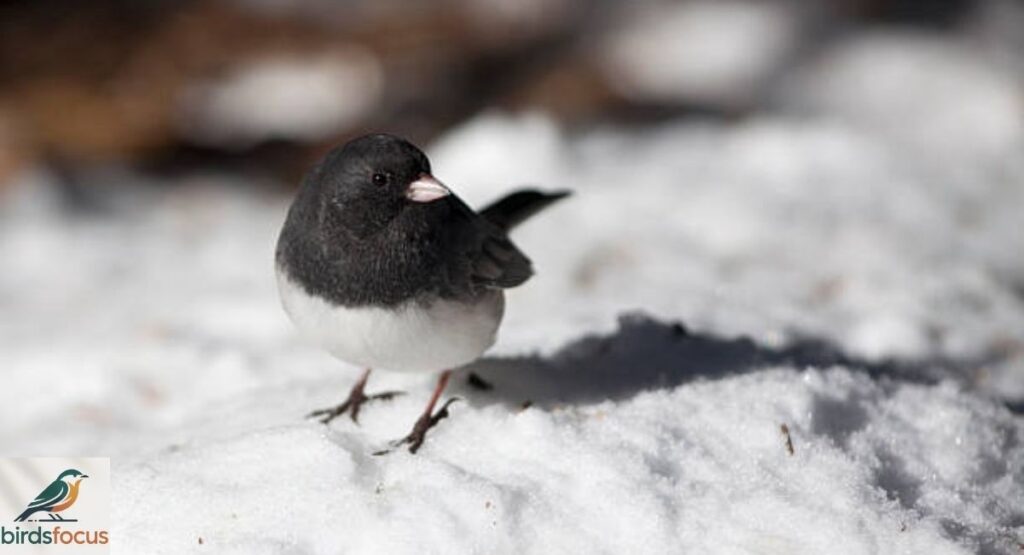
The Slate-colored Junco is the most common form in eastern North America. Adult males display smooth slate-gray feathers across the head, back, and chest with a bright white belly. Females usually appear lighter gray with a slightly brownish tint. This clean and simple appearance makes the Slate-colored Junco one of the easiest birds to recognize during winter.
These birds breed throughout Canada and Alaska before migrating into the eastern and central United States. They enjoy forests, woodland edges, parks, and suburban gardens where seeds are plentiful. Their soft trills and calm behavior make them welcome guests at backyard feeders.
Oregon Junco
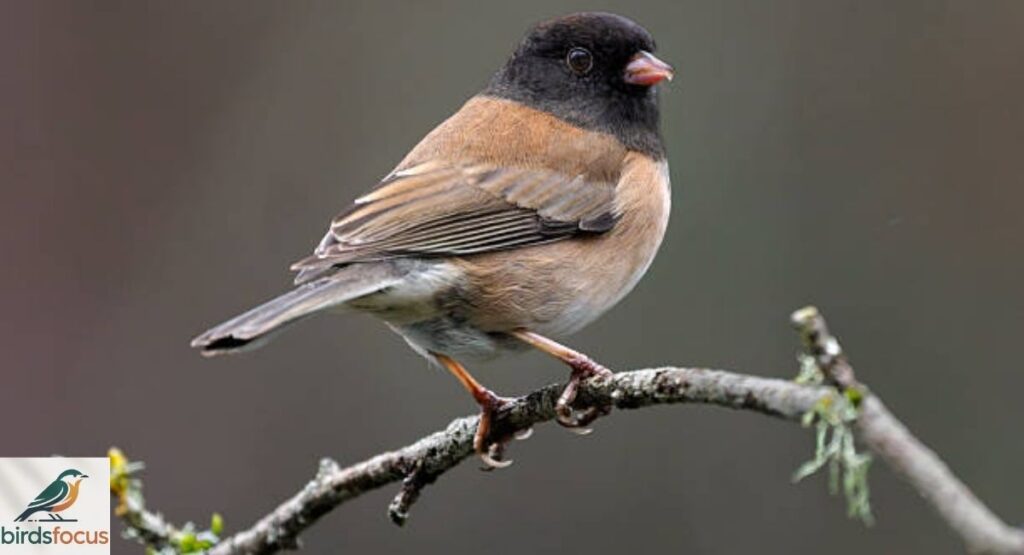
The Oregon Junco is the dominant western form of the Junco Bird. It features a bold black hood, rich brown back, rusty sides, and a crisp white belly. The strong color contrast gives it a more colorful appearance than other junco forms.
You can commonly find Oregon Juncos from British Columbia to California and throughout the Pacific Northwest. During winter, many birds move into neighborhoods, gardens, and city parks where they feed on seeds beneath shrubs and bird feeders.
Gray-Headed Junco
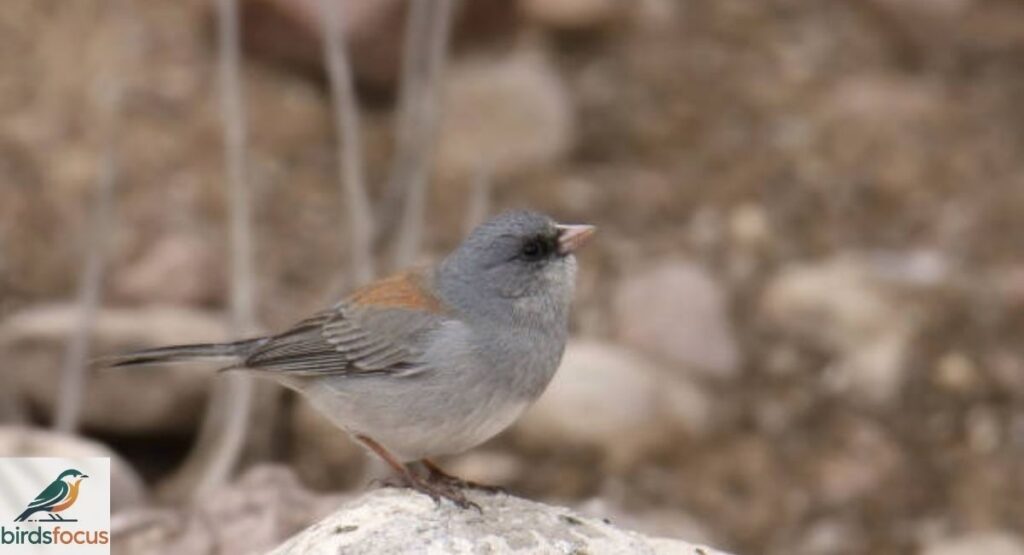
The Gray-headed Junco lives mainly in the Rocky Mountains of Colorado, New Mexico, Arizona, Utah, and nearby states. Its gray head blends smoothly into a reddish-brown back, creating a distinctive color combination rarely seen in other juncos.
Unlike some forms that migrate long distances, many Gray-headed Juncos move only short distances between mountain forests and lower valleys. Their strong preference for pine forests and high elevations helps separate them from other populations.
Pink-Sided Junco
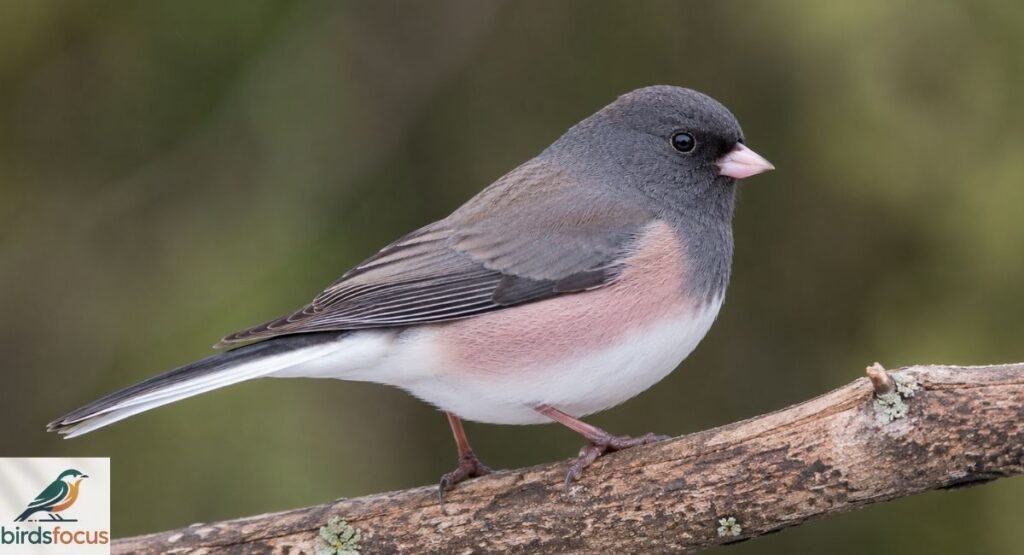
The Pink-sided Junco is famous for its soft pinkish-brown sides that give the bird its name. It also has a gray head, brown back, and white belly. These gentle colors create one of the most attractive appearances among all junco forms.
This bird breeds mainly in Wyoming, Montana, Idaho, and nearby mountain regions. During winter, it travels south into lower elevations where birdwatchers often discover it feeding quietly beneath evergreen trees.
White-Winged Junco
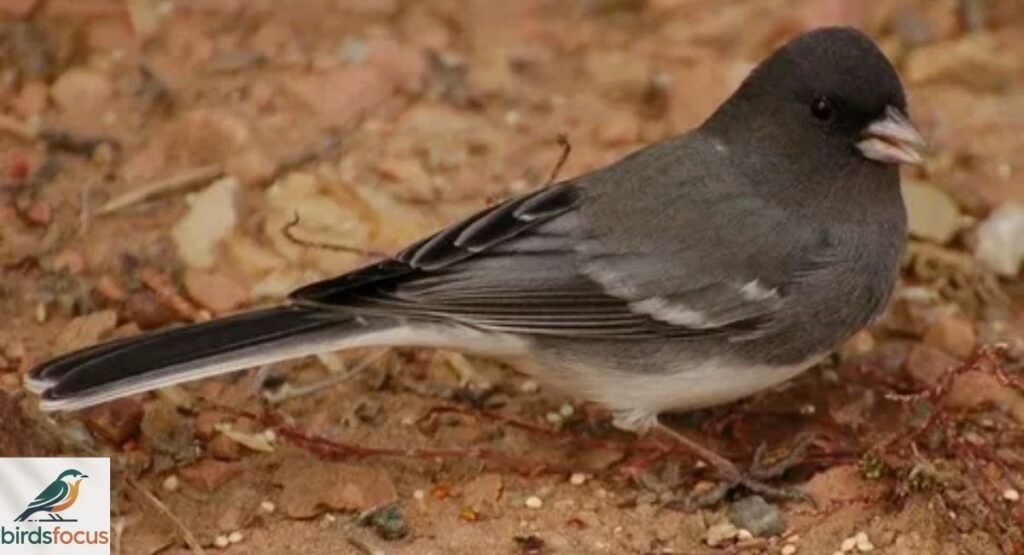
The White-winged Junco is one of the rarest forms because it occupies a very limited range around the Black Hills of South Dakota and Wyoming. It closely resembles the Slate-colored Junco but has two bright white wing bars that immediately catch the eye.
Its isolated breeding population has remained stable for many years. Bird enthusiasts often travel specifically to the Black Hills to add this beautiful junco to their life lists because it appears almost nowhere else.
Guadalupe Junco
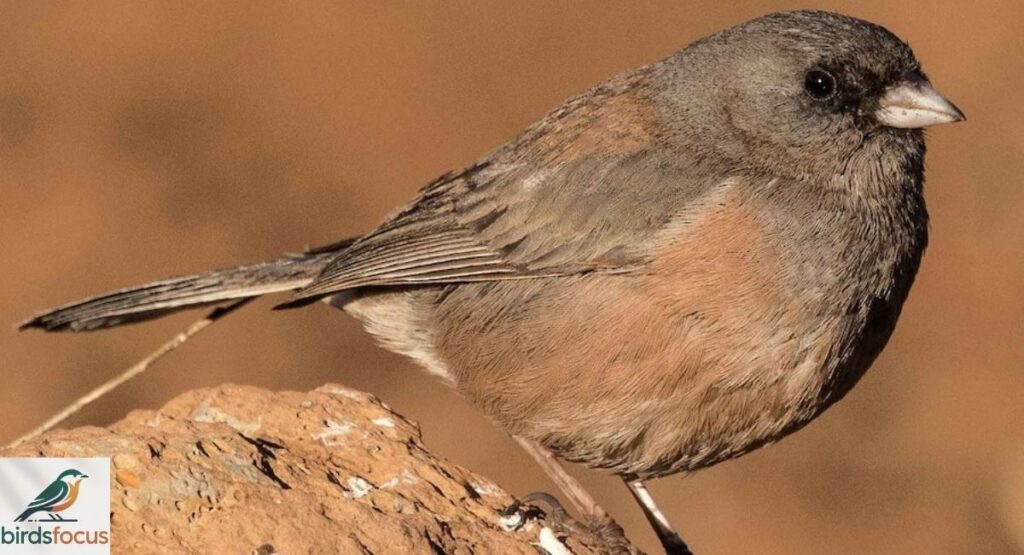
The Guadalupe Junco is the only junco found exclusively on Guadalupe Island off the Pacific coast of Mexico. Unlike the widespread Dark-eyed Junco, this bird exists only in one small location. Habitat loss and introduced predators have reduced its numbers, making conservation efforts extremely important.
Scientists consider the Guadalupe Junco an endangered species because its population remains very small. Ongoing habitat restoration projects continue to improve its chances of survival. Protecting this unique bird also preserves an important part of North America’s natural heritage.
Comparison of Major Junco Bird Types
| Junco Type | Main Color | Primary Range | Special Feature |
| Slate-Colored Junco | Slate Gray | Eastern USA & Canada | Smooth gray plumage |
| Oregon Junco | Black, Brown, White | Western USA & Canada | Black hood and brown back |
| Gray-Headed Junco | Gray and Rusty Brown | Rocky Mountains | Gray head with reddish back |
| Pink-Sided Junco | Gray with Pink Sides | Northern Rockies | Pinkish flanks |
| White-Winged Junco | Gray with White Wing Bars | Black Hills | Bright white wing stripes |
| Guadalupe Junco | Dark Gray | Guadalupe Island, Mexico | Endangered island species |
Did You Know?
| Interesting Fact | Details |
| Number of Main Forms | Six widely recognized forms |
| Most Common Form | Slate-colored Junco |
| Most Colorful Form | Oregon Junco |
| Rarest Form | Guadalupe Junco |
| Smallest Range | White-winged Junco |
| Endangered Form | Guadalupe Junco |
Junco Bird Habitat
A Junco Bird can live in many environments, yet it always prefers places that offer shelter, food, and safe nesting areas. Dense forests remain its favorite home during the breeding season. As temperatures drop, these adaptable birds move into parks, gardens, farms, and residential neighborhoods. Their ability to thrive in both wild landscapes and human communities explains why they are among the most familiar backyard birds in North America.
Habitat changes throughout the year because juncos migrate with the seasons. In spring and summer, they settle in cool mountain forests where predators are fewer and nesting sites are plentiful. During fall and winter, they travel to lower elevations where seeds remain available. This seasonal movement allows the Junco Bird to survive even when snow covers its northern breeding grounds.
Preferred Woodland Habitat
Woodlands provide nearly everything a Junco Bird needs. Thick shrubs offer protection from predators, while fallen leaves hide insects and seeds beneath the forest floor. Juncos spend much of the day hopping through these quiet areas searching for food.
Mixed woodlands with both evergreen and deciduous trees create the best habitat. These forests produce seeds, berries, and insects throughout the year. Low vegetation also gives nesting females excellent camouflage during the breeding season.
Evergreen Forests
Evergreen forests play an important role in the life of the Junco Bird. Pine, fir, spruce, and cedar trees provide year-round shelter because they keep their needles during winter. These trees also protect birds from strong winds, heavy snowfall, and extreme temperatures.
The forest floor beneath evergreens often stays rich in seeds and insects. Even after snowfall, juncos can search beneath branches where food remains easier to reach. This natural protection helps many birds survive long winters in northern regions.
Mountains and Parks
Many populations of the Junco Bird breed in mountain forests where cool temperatures create ideal nesting conditions. Higher elevations contain dense vegetation, fresh water, and fewer human disturbances. Rocky Mountain forests, the Sierra Nevada, and the Cascade Range all support healthy breeding populations.
Outside the breeding season, city parks become valuable habitats. Mature trees, grassy lawns, and scattered shrubs provide food and shelter. Public parks also introduce many people to birdwatching because juncos often feed openly along walking paths.
Backyard Habitat
One reason the Junco Bird is so popular is its willingness to visit backyard feeders. Unlike many birds that stay in trees, juncos usually search for food on the ground beneath feeders. They enjoy quiet gardens with shrubs, native plants, and leaf litter where insects and seeds naturally collect.
Creating a bird-friendly backyard is simple. Fresh water, dense bushes, and seed-producing native plants encourage regular visits. Leaving some fallen leaves during autumn also provides natural feeding areas and shelter for insects that become valuable food sources.
Habitat at a Glance
| Habitat Type | Importance to Juncos |
| Evergreen Forests | Winter shelter and nesting |
| Mixed Woodlands | Food and cover |
| Mountain Forests | Breeding habitat |
| Parks | Winter feeding grounds |
| Backyards | Reliable food during migration |
| Shrublands | Protection from predators |
Junco Bird Range and Distribution
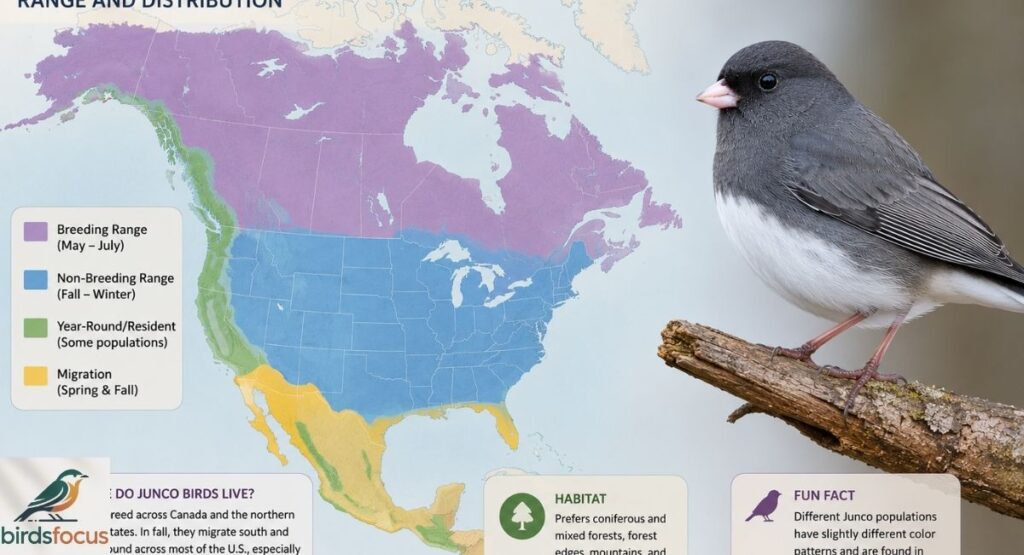
The Junco Bird has one of the largest ranges among North American songbirds. Different populations occupy forests stretching from Alaska to Mexico. While some birds remain in the same region throughout the year, others migrate hundreds or even thousands of miles between breeding and wintering grounds.
Scientists classify the Dark-eyed Junco as a partial migrant because not every population travels long distances. Birds living in colder northern areas migrate farther south each autumn. Those living in milder climates often stay close to home throughout the year. This flexible strategy allows the species to adapt successfully to changing weather conditions.
Where Do Juncos Live?
A Junco Bird lives across much of Canada, the United States, and parts of northern Mexico. During summer, most breeding populations occupy cool forests filled with coniferous trees. As winter approaches, millions spread into suburban neighborhoods, gardens, farms, and city parks.
Each regional form has its own preferred range. Oregon Juncos dominate western North America, while Slate-colored Juncos occupy eastern Canada and much of the northeastern United States. Gray-headed, Pink-sided, and White-winged Juncos each live in more specialized regions.
Summer Range
Summer marks the breeding season for the Junco Bird. Most birds move northward or climb into higher mountain forests where temperatures remain cool. Canada, Alaska, the Rocky Mountains, the Sierra Nevada, and the Appalachian Mountains all provide ideal nesting habitats.
These breeding areas contain abundant insects that help young chicks grow quickly. Dense vegetation also protects nests from predators and harsh weather during the early weeks of life.
Winter Range
As temperatures fall, millions of Junco Bird populations migrate into the United States. They appear in forests, parks, gardens, farms, and suburban neighborhoods from coast to coast. Southern states often host large winter flocks because food remains available throughout the season.
Winter visitors frequently gather beneath bird feeders where they search for millet, sunflower chips, and naturally fallen seeds. Their arrival has earned them the famous nickname “snowbirds” because many people first notice them shortly before winter weather begins.
Migration Map
Although migration routes vary among populations, most Junco Bird movements follow a simple north-to-south pattern. Birds breeding in Canada and Alaska fly south into the United States during autumn before returning north in spring. Mountain populations often migrate vertically by moving from high elevations into nearby valleys.
Modern bird-banding studies and satellite tracking continue to reveal fascinating migration patterns. Scientists have discovered that daylight length influences migration more strongly than temperature. This natural biological clock helps juncos begin their seasonal journeys at nearly the same time each year.
Junco Bird Distribution by Region
| Region | Seasonal Presence |
| Alaska | Summer |
| Canada | Summer |
| Northern USA | Summer & Winter |
| Western USA | Year-round (many areas) |
| Eastern USA | Mostly Winter |
| Southern USA | Winter |
| Northern Mexico | Winter |
Seasonal Movement Overview
| Season | Typical Location |
| Spring | Migration to breeding grounds |
| Summer | Northern forests and mountains |
| Autumn | Southward migration |
| Winter | Parks, gardens, woodlands, and backyards |
The impressive range of the Junco Bird demonstrates its remarkable adaptability. Whether living in snowy mountain forests, evergreen woodlands, peaceful parks, or suburban gardens, this small songbird continues to thrive across North America. Its seasonal movements also make it one of the easiest birds for beginners to observe throughout the changing seasons, especially among winter visitors and migratory birds.
Why Are Juncos Called Snowbirds?
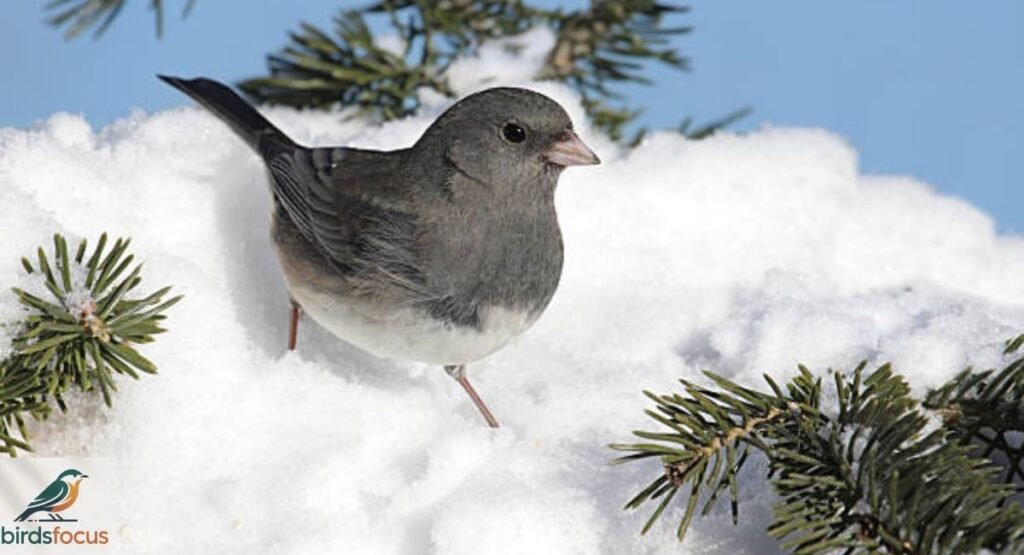
The Junco Bird is widely known as the “snowbird” because it appears in many parts of the United States just as cold weather begins. For generations, people have noticed flocks arriving in late autumn before the first snowfall. Although juncos do not bring winter, their seasonal migration has made them a traditional symbol of changing weather. Their quiet calls and busy feeding habits brighten gardens when many other birds have already migrated south.
Winter Migration Explained
Most Junco Bird populations breed in Canada, Alaska, and cool mountain forests across North America. As daylight hours become shorter during autumn, they begin moving toward warmer regions where food is easier to find. Unlike many long-distance migrants, some juncos travel only a few hundred miles, while mountain populations simply descend to lower elevations.
Scientists have discovered that changing daylight affects migration more than temperature. Even if autumn remains unusually warm, juncos still begin their journey because their internal biological clock responds to shorter days. This predictable pattern explains why they return to many neighborhoods at nearly the same time each year.
Relationship with Snowfall
Many people believe the Junco Bird predicts snow because it often appears before winter storms. In reality, the birds are responding to seasonal daylight rather than incoming weather systems. Their arrival and the beginning of winter simply happen around the same time, creating a connection that has become part of American folklore.
Despite this popular belief, juncos are exceptionally well adapted to snowy conditions. They continue feeding beneath shrubs, trees, and bird feeders even when fresh snow covers the ground. Their thick winter feathers provide excellent insulation against freezing temperatures.
Do Juncos Predict Winter?
The Junco Bird cannot predict winter weather like a weather forecast. Instead, it follows natural seasonal rhythms that have evolved over thousands of years. These instincts tell the bird when to migrate, breed, and prepare for colder conditions.
Although the birds do not forecast storms, their annual arrival has become a reliable seasonal sign for many birdwatchers. Seeing the first junco of the year often reminds people that autumn is ending and winter is approaching. This tradition continues to make the snowbird one of North America’s most beloved migratory songbirds.
Junco Bird Behavior
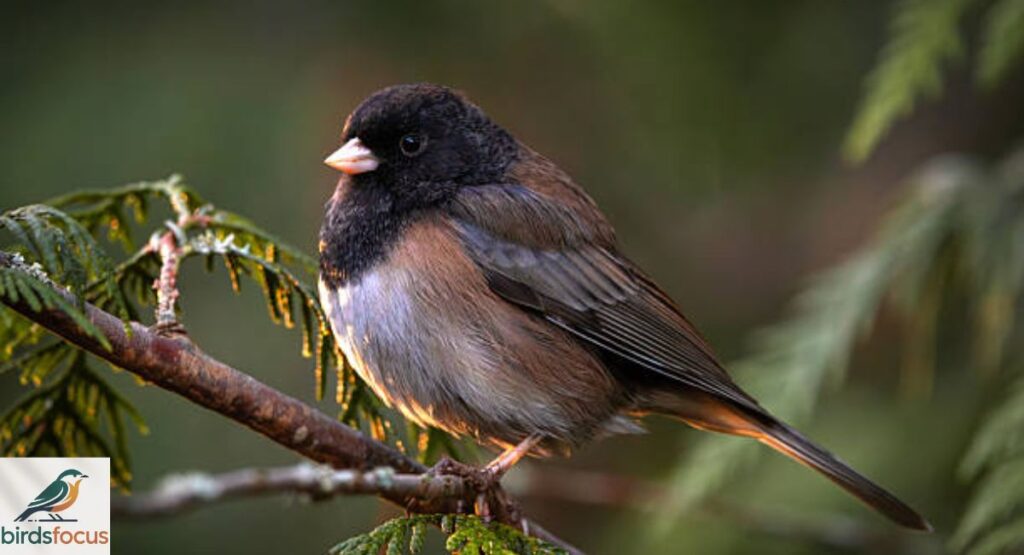
The Junco Bird may look quiet and gentle, yet it stays active throughout the day. Most of its time is spent searching for food, communicating with flock members, or avoiding predators. Unlike many small birds that remain high in trees, juncos prefer the ground where seeds, insects, and fallen berries are easier to find. Their energetic movements make them enjoyable to watch in forests and gardens alike.
Behavior changes with the seasons. During winter, juncos often gather in peaceful flocks to improve their chances of finding food and spotting danger. In spring, breeding pairs become more territorial as males defend nesting areas with songs and display flights. These seasonal changes help the Junco Bird survive in a wide variety of habitats across North America.
Ground Feeding Habits
The Junco Bird spends much of its day hopping across the ground instead of walking. It scratches through dry leaves, loose soil, and snow to uncover hidden seeds, insects, and tiny spiders. This feeding style allows the bird to find food that many tree-feeding species overlook.
Flocking Behavior
Outside the breeding season, the Junco Bird often joins flocks containing 15 to 30 individuals. Living in groups provides several advantages. More birds can search for food at once while others remain alert for predators such as hawks and domestic cats.
Daily Activities
A typical Junco Bird begins feeding shortly after sunrise. Throughout the morning, it searches woodland floors, grassy lawns, and backyard gardens before taking short breaks to rest or preen its feathers. During the warmest hours of the day, activity often slows as birds conserve energy.
Territorial Behavior
During spring, male Junco Bird populations become surprisingly protective of their nesting territories. They sing from low branches, chase away rivals, and display their white tail feathers to warn competing males. These behaviors reduce conflict and help secure safe breeding areas.
What Does a Junco Bird Eat?
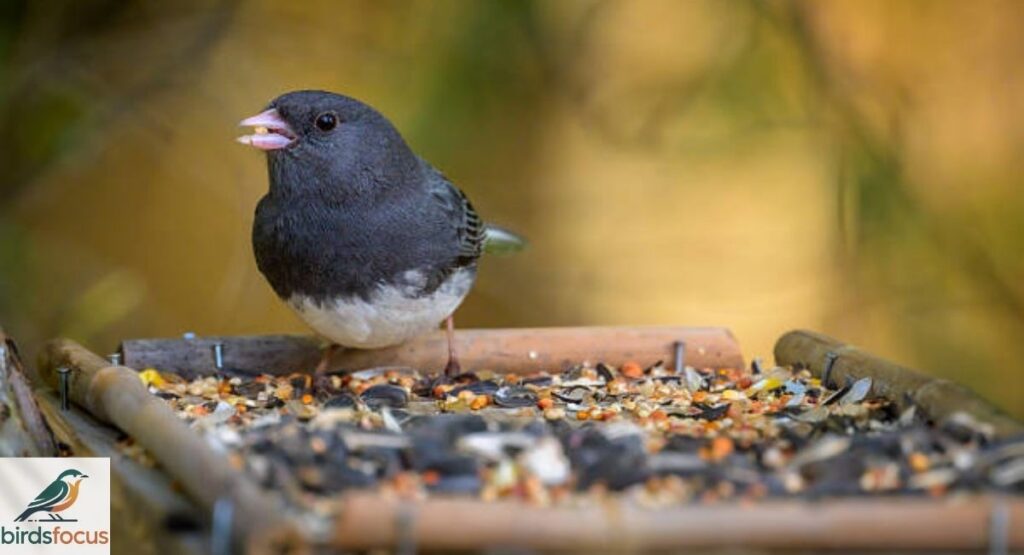
The Junco Bird has a varied diet that changes with the seasons. During winter, it mainly eats seeds because insects become scarce. In spring and summer, it adds insects and other small invertebrates to its meals to provide extra protein for growing chicks. This flexible feeding habit helps the bird survive in forests, mountains, parks, and suburban neighborhoods across North America.
Favorite Seeds
Seeds make up the largest part of a Junco Bird‘s diet, especially during autumn and winter. The bird prefers small seeds because they are easy to crack with its short, cone-shaped bill. White proso millet ranks among its favorite foods, although it also enjoys sunflower chips, cracked corn, and various grass seeds.
Native plants naturally produce many of the seeds juncos rely on throughout the year. Wildflowers, weeds, and grasses growing around woodland edges provide valuable nutrition. Leaving some natural vegetation in your yard can create an excellent feeding area without much effort.
Insects and Spiders
As spring arrives, the Junco Bird begins eating more insects and spiders. These protein-rich foods become especially important during the breeding season because young chicks require nutritious meals for healthy growth. Adult juncos search beneath leaves, bark, and low vegetation to find beetles, caterpillars, ants, flies, and tiny spiders.
This insect-rich diet also benefits gardens because juncos naturally reduce populations of small pests. Their constant foraging helps control insects without using chemicals, making them valuable visitors for homeowners who enjoy wildlife-friendly landscapes.
Fruits and Berries
Although seeds remain their primary food, the Junco Bird occasionally eats soft fruits and berries. During late summer and autumn, wild berries become an important energy source before migration begins. Elderberries, blackberries, dogwood berries, and small native fruits provide natural sugars that help birds build fat reserves.
These seasonal foods are especially helpful during years when seed production is lower than usual. A diverse diet allows juncos to adapt to changing environmental conditions while maintaining good health.
Best Feeders for Junco Bird
Choosing the right feeder increases your chances of attracting a Junco Bird. Since these birds naturally feed on the ground, platform feeders and ground trays work much better than hanging tube feeders. Placing feeders near shrubs gives birds quick shelter if predators appear.
Keeping feeding areas clean is equally important. Fresh seed, dry feeding surfaces, and nearby water encourage regular visits throughout winter. Many experienced birdwatchers scatter small amounts of millet directly on the ground because juncos often prefer this natural feeding style.
| Best Feeders | Why They Work |
| Platform Feeder | Easy ground-level access |
| Ground Tray | Mimics natural feeding |
| Low Hopper Feeder | Suitable for small flocks |
| Ground Seed Area | Closely matches natural behavior |
How to Attract Juncos to Your Backyard
Attracting a Junco Bird begins with creating a safe and natural environment. Dense shrubs, evergreen bushes, native grasses, and fallen leaves provide shelter while offering insects and seeds throughout the year. Quiet gardens with little disturbance are far more attractive than wide open spaces.
Fresh water is another essential feature. A shallow birdbath placed near shrubs gives birds a safe place to drink and bathe. During winter, unfrozen water becomes even more valuable because natural water sources may freeze.
Best Foods for Junco Birds
| Food | Preference |
| White Proso Millet | Excellent |
| Hulled Sunflower Seeds | Excellent |
| Cracked Corn | Very Good |
| Nyjer Seed | Good |
| Grass Seeds | Very Good |
| Small Berries | Good |
| Beetles | Excellent in Summer |
| Caterpillars | Excellent in Summer |
| Ants | Good |
| Tiny Spiders | Very Good |
Seasonal Diet of a Junco Bird
| Season | Main Food Sources |
| Spring | Insects, spiders, seeds |
| Summer | Insects, caterpillars, berries |
| Autumn | Seeds, berries, grains |
| Winter | Millet, sunflower chips, grass seeds |
The adaptable diet of the Junco Bird plays a major role in its success across North America. Whether feeding on seeds beneath backyard feeders or searching woodland floors for insects, these resourceful birds make the most of every season. Offering the right foods and maintaining a wildlife-friendly yard will encourage these beautiful winter songbirds and seed-eating birds to visit your garden year after year.
Junco Bird Nest
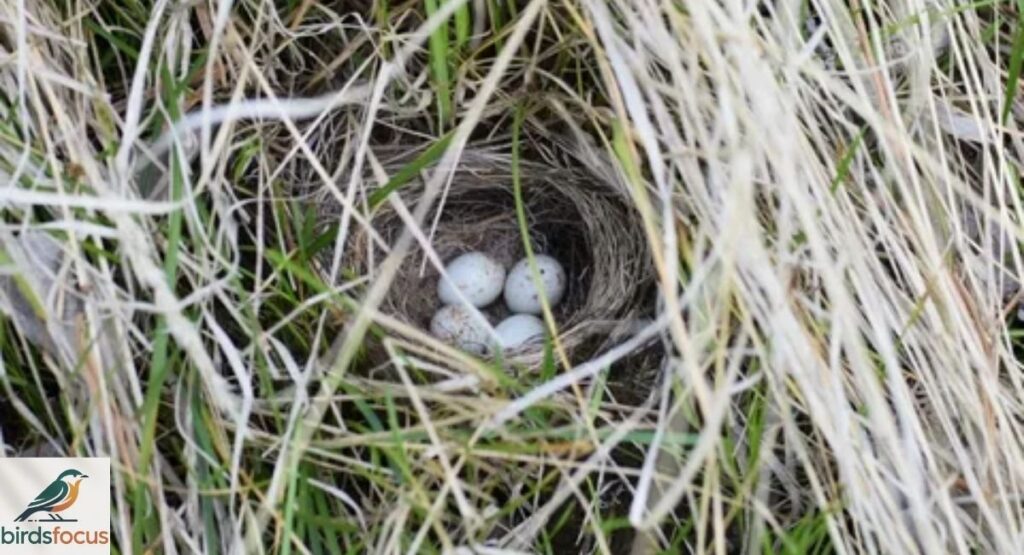
The Junco Bird builds one of the most carefully hidden nests among North American songbirds. Instead of nesting high in trees, it usually chooses protected spots on or very close to the ground. Thick vegetation, fallen logs, rocky banks, and tree roots provide natural cover that helps keep eggs and chicks safe from predators.
Female juncos spend considerable time selecting a secure nesting location before construction begins. Males defend nearby territories with songs and display flights while females focus on building the nest. Their teamwork allows each breeding season to begin successfully even in busy woodland habitats.
Nesting Season
The nesting season for the Junco Bird usually begins between April and July, depending on location and weather conditions. Birds living in warmer regions often start breeding earlier than those in northern forests or high mountain areas. Some pairs successfully raise two or even three broods during a single breeding season.
Longer daylight hours and increasing insect populations provide the perfect conditions for raising young. These seasonal changes ensure chicks have enough food to grow quickly before autumn migration begins.
Eggs and Incubation
A female Junco Bird usually lays three to six eggs in each clutch. The eggs are pale white, creamy white, or light bluish with tiny brown or gray speckles concentrated near the larger end. Their natural coloring helps them remain difficult for predators to detect inside the nest.
| Nesting Facts | Details |
| Clutch Size | 3–6 eggs |
| Egg Color | White or bluish with brown speckles |
| Incubation Period | 11–13 days |
| Main Incubating Parent | Female |
| Number of Broods | Usually 2–3 each year |
Baby Juncos
Newly hatched Junco Bird chicks are tiny, blind, and almost featherless. They depend completely on their parents for warmth, protection, and food. Both adults make frequent feeding trips throughout the day, bringing insects, spiders, and other protein-rich prey that help the chicks grow rapidly.
Within a week, soft feathers begin covering their bodies. Their eyes gradually open, and they become more active inside the nest. By the second week, young juncos exercise their wings while waiting for their first flight into the surrounding vegetation.
How Long Do Young Juncos Stay with Parents?
Young Junco Bird chicks usually leave the nest about 10 to 13 days after hatching. Even though they can fly short distances, they still rely on their parents for food and protection during the next two to three weeks. This period allows them to strengthen their flying skills while learning how to search for food independently.
The family often stays together until the young birds become fully self-sufficient. As autumn approaches, juvenile juncos join larger flocks where they continue learning survival skills from experienced adults before their first migration.
Growth Stages of a Junco Bird
| Life Stage | Average Time |
| Egg | 11–13 days |
| Hatchling | 0–5 days |
| Nestling | 6–13 days |
| Fledgling | 2–3 weeks |
| Independent Juvenile | About 1 month |
Junco Bird Life Cycle
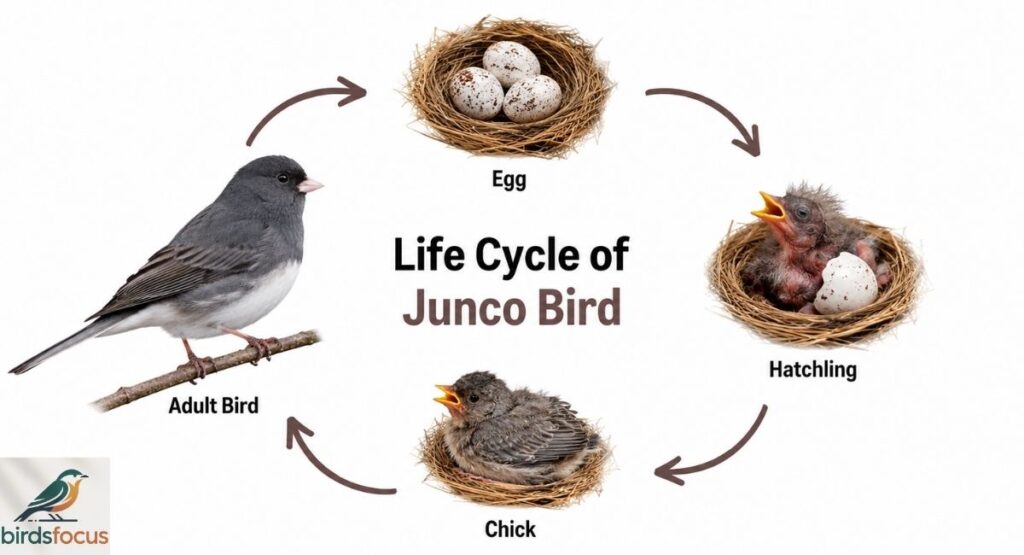
The life cycle of a Junco Bird follows a remarkable seasonal pattern that repeats every year. Courtship begins in early spring when males return to breeding territories and sing to attract mates. After nesting, raising chicks, and completing the breeding season, families prepare for migration before winter arrives. This yearly rhythm has allowed juncos to thrive across North America for thousands of years.
Courtship
Courtship begins when male Junco Bird individuals establish small territories in suitable breeding habitats. They sing from low branches while spreading their tails and hopping around potential mates. These displays demonstrate strength, health, and the ability to defend a nesting area.
Breeding
Breeding usually takes place between spring and early summer. After mating, the female builds a nest while the male continues protecting the surrounding territory. Once the eggs hatch, both parents collect insects almost continuously because growing chicks require large amounts of protein.
Lifespan
The average Junco Bird lives between three and five years in the wild, although many do not survive their first year because of predators and harsh environmental conditions. Birds that successfully reach adulthood often enjoy much longer lives.
Predators
Despite their quick movements, the Junco Bird faces many natural predators. Hawks, owls, snakes, foxes, raccoons, squirrels, domestic cats, and crows all hunt either adult birds, eggs, or young chicks. Ground nests remain especially vulnerable during the breeding season.
Survival Rate
Only a portion of young Junco Bird chicks survive their first year. Harsh winters, habitat loss, predators, and food shortages all reduce survival rates. However, adults that reach maturity often become skilled at finding food and avoiding danger.
Complete Life Cycle of a Junco Bird
| Stage | Description |
| Courtship | Males sing and defend territories |
| Nest Building | Female constructs hidden cup nest |
| Egg Laying | 3–6 eggs per clutch |
| Incubation | 11–13 days |
| Chick Stage | Parents feed insects and spiders |
| Fledging | Around 10–13 days after hatching |
| Independence | About one month after hatching |
| Breeding Adult | Returns the following spring |
Junco Bird Sounds and Calls
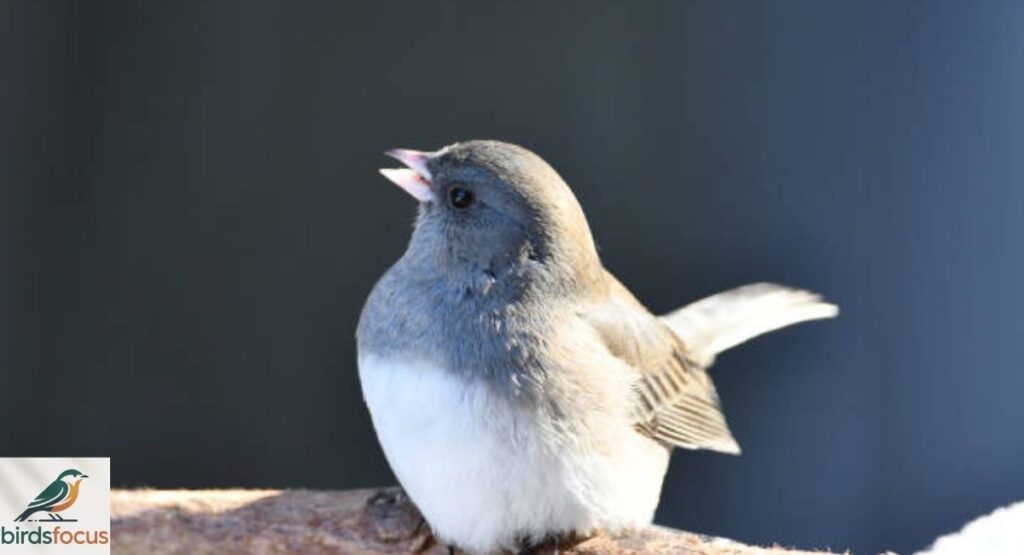
The Junco Bird may not be as loud as a cardinal or mockingbird, yet its soft voice is one of the first sounds many birdwatchers notice during spring. These birds use a variety of songs and calls to communicate with mates, defend territories, and warn nearby flock members about danger. Their musical notes are simple, pleasant, and easy to recognize once you become familiar with them.
You are more likely to hear a Junco Bird before you see one. Males often sing from low branches or the tops of shrubs during the breeding season, while both males and females use short calls throughout the year. Listening carefully can help you identify juncos even in dense forests where they remain hidden among leaves. Their gentle voice makes them one of the easiest North American songbirds to identify by sound.
Junco Bird Pronunciation
Many people see the name Junco Bird before they ever hear someone say it aloud. Because the spelling looks unusual, beginners often wonder how to pronounce it correctly. Fortunately, the pronunciation is simple and easy to remember once you hear it spoken.
The word “Junco” comes from the Latin word juncus, meaning “rush” or “reed.” Early naturalists chose the name because these birds were often observed near grassy habitats. Today, birdwatchers across North America pronounce the name in nearly the same way.
Junco (JUNG-koh)
The correct English pronunciation of Junco is:
JUNG-koh
The first syllable sounds like “jung,” which rhymes with “young.” The second syllable sounds like “koh,” similar to the beginning of the word “coast.” Stress falls on the first syllable.
| Word | Correct Pronunciation |
| Junco | JUNG-koh |
How to Pronounce “Junco”
A simple way to remember the pronunciation is to divide the word into two parts: JUNG and koh. Say the first part clearly, then smoothly finish with the second. Speaking slowly a few times usually helps beginners remember the correct pronunciation.
Most bird experts, ornithologists, and wildlife organizations use the same pronunciation. Whether you are talking with birdwatchers or reading field guides, saying JUNG-koh will be understood almost everywhere.
Meaning of the Name “Junco”
The name Junco comes from the Latin word juncus, which refers to rushes and reed-like plants. Early scientists believed these birds were commonly associated with grassy habitats where such plants grew naturally.
Although modern juncos occupy forests, mountains, parks, and suburban gardens, the historical name has remained unchanged for centuries. Today, the word identifies one of North America’s most recognizable winter songbirds and backyard birds.
Quick Pronunciation Guide
| Term | Pronunciation | Meaning |
| Junco | JUNG-koh | Name of the bird |
| Junco hyemalis | JUNG-koh hy-EM-ah-liss | Scientific name of the Dark-eyed Junco |
| Hyemalis | hy-EM-ah-liss | Latin for “of winter” |
Junco Bird vs Similar Birds
At first glance, a Junco Bird can resemble several other small birds. Similar body size, seed-eating habits, and gray or brown plumage often confuse beginner birdwatchers. Looking closely at feather colors, feeding behavior, tail patterns, and habitat makes identification much easier.
The Junco Bird usually has a smooth-colored body, a pale pink bill, and bright white outer tail feathers. Most similar birds have streaked breasts, different facial markings, or spend more time feeding in trees. Learning these differences improves your bird identification skills throughout the year.
Junco vs Chickadee
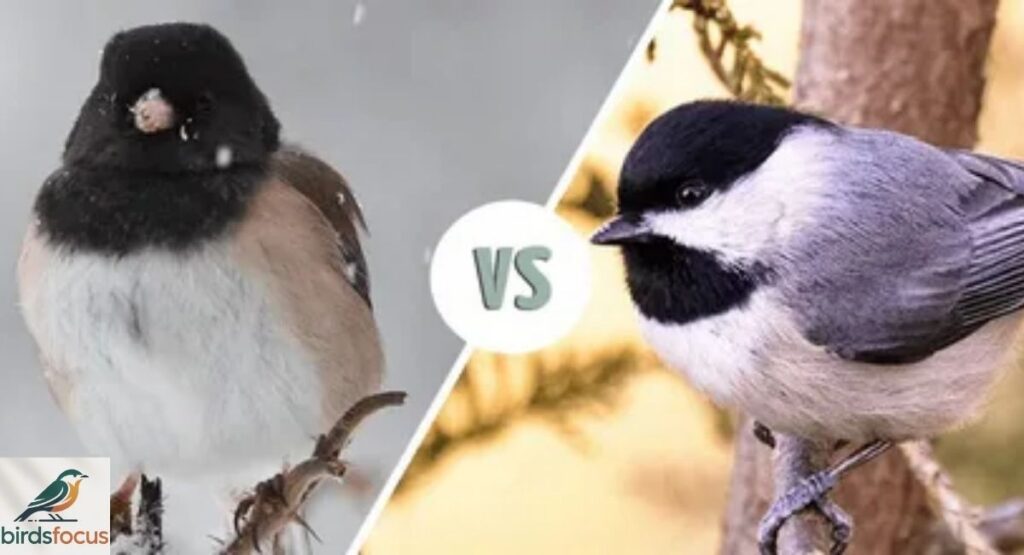
A Black-capped Chickadee has a black cap, white cheeks, and a tiny black bill. It spends much of its time climbing branches while searching for insects hidden beneath bark.
The Junco Bird, in contrast, usually feeds on the ground. It has a pale pink bill, white belly, and flashes white outer tail feathers during flight. Chickadees remain active in trees far more often than juncos.
Junco vs American Tree Sparrow
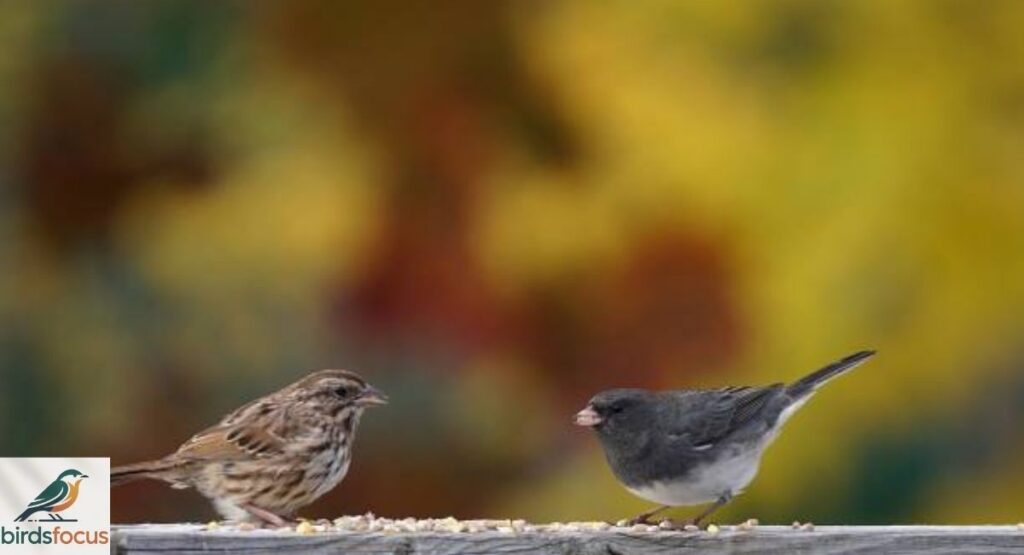
The American Tree Sparrow has a rusty cap, streaked chest, and a dark spot in the center of its breast. Its two-colored bill also differs from the plain pink bill of a Junco Bird.
Both species visit feeders during winter, yet juncos usually appear smoother and less streaked. Watching the breast pattern quickly separates these two birds.
Junco vs Chipping Sparrow
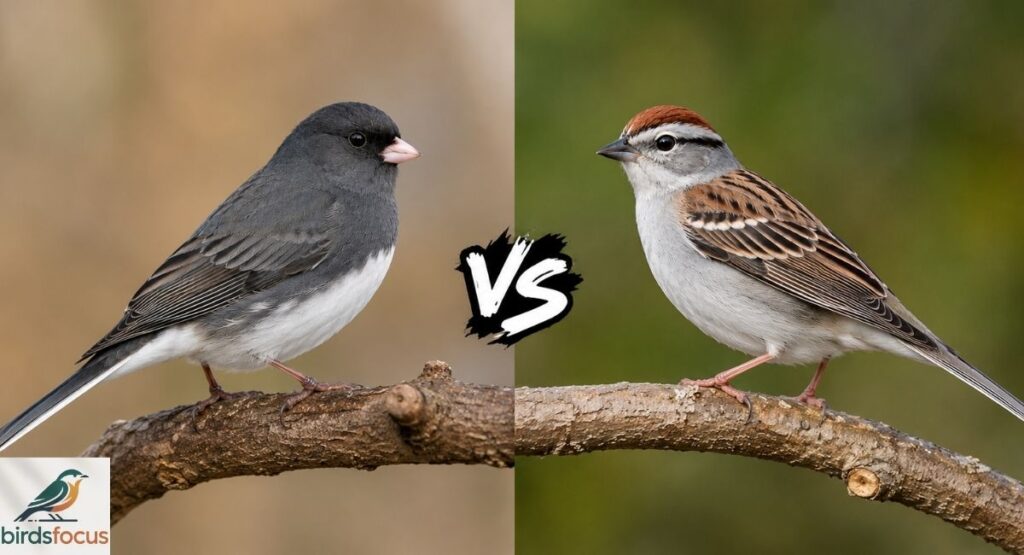
The Chipping Sparrow develops a bright rusty crown and bold black eye line during the breeding season. It also has a slimmer appearance than a Junco Bird.
Unlike juncos, Chipping Sparrows spend more time in shrubs and low trees. Their faster movements and different facial markings help experienced birdwatchers distinguish them easily.
Junco vs White-Throated Sparrow
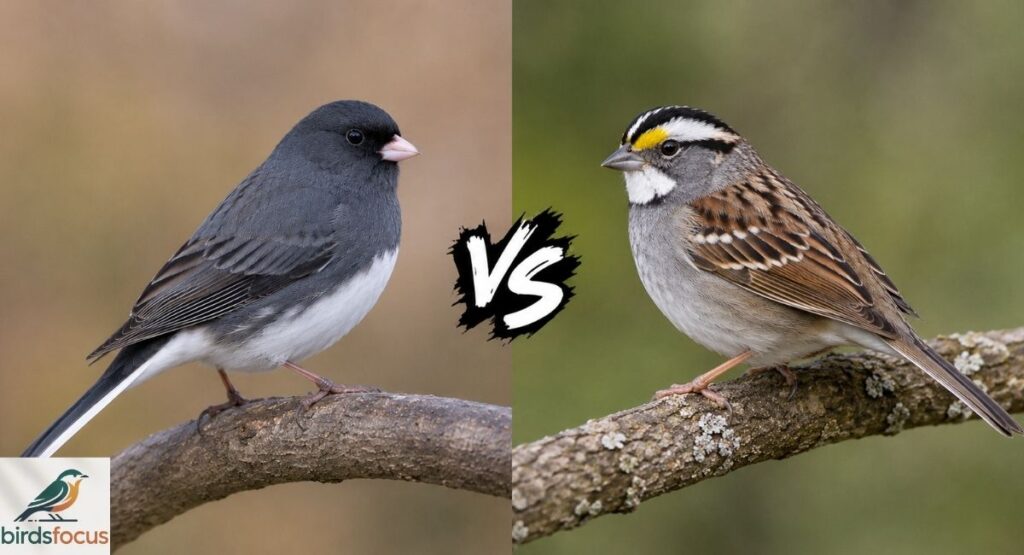
The White-throated Sparrow has a bright white throat, yellow patches near the eyes, and bold striped head markings. These colorful facial features immediately separate it from the smoother appearance of a Junco Bird.
Although both species often feed on the ground, White-throated Sparrows appear larger and display much stronger head patterns. The junco’s plain face and white tail feathers remain reliable identification clues.
Comparison Table
| Feature | Junco Bird | Chickadee | American Tree Sparrow | Chipping Sparrow | White-throated Sparrow |
| White Belly | Yes | No | Light Gray | Light Gray | White Throat Only |
| Pink Bill | Yes | No | Two-colored | Black | Yellow Bill |
| White Tail Feathers | Yes | No | No | No | No |
| Main Feeding Area | Ground | Trees | Ground | Shrubs | Ground |
| Winter Visitor | Very Common | Year-round | Winter | Mostly Summer | Winter |
Understanding these differences makes identifying a Junco Bird much easier. Careful observation of plumage, feeding style, and behavior will help you recognize this charming bird even when several similar species appear in the same backyard or woodland.
Interesting Facts About Junco Birds
The Junco Bird may look simple, yet it has many fascinating characteristics that surprise even experienced birdwatchers. From its remarkable winter survival skills to its long lifespan, this small songbird has adapted beautifully to changing seasons across North America. Learning these unique facts helps you appreciate why millions of people eagerly welcome juncos to their gardens every winter.
Scientists continue studying the Junco Bird because it adapts quickly to different environments. Whether living in mountain forests or suburban neighborhoods, these birds demonstrate impressive intelligence and resilience. Their ability to adjust to changing habitats has made them one of the most successful winter songbirds and backyard birds in North America.
They Belong to the Sparrow Family
Although many people mistake them for finches, every Junco Bird belongs to the Passerellidae family, commonly known as the New World sparrows. This family includes dozens of ground-feeding birds that share similar body shapes and feeding habits.
They Spend Most of Their Time on the Ground
The Junco Bird prefers hopping instead of walking. It spends much of the day searching beneath leaves, grasses, and shrubs for hidden seeds and insects. This ground-feeding habit explains why juncos usually appear below bird feeders instead of sitting on them.
Winter Feathers Keep Them Warm
As temperatures fall, the Junco Bird develops thicker feathers that trap warm air close to its body. Research shows winter plumage can become significantly heavier than summer feathers, providing excellent insulation during freezing weather.
They Can Live More Than 10 Years
Although many young birds face difficult first winters, adult Junco Bird individuals can live surprisingly long lives. Bird-banding records have documented some Dark-eyed Juncos living for more than 11 years in the wild.
Daylight Triggers Migration
Many people believe cold weather forces the Junco Bird to migrate. Scientists have discovered something even more interesting. Changes in daylight length trigger migration much more strongly than falling temperatures.
Are Junco Birds Friendly?
The Junco Bird is known for its peaceful and gentle personality. Although it remains cautious around humans, it rarely behaves aggressively toward people. Instead of flying away immediately, many juncos calmly continue feeding if observers remain quiet and keep a respectful distance.
Their relaxed nature makes them excellent birds for beginner birdwatchers. Families often enjoy watching flocks feed beneath backyard feeders during winter. With patience and a safe environment, these birds become regular visitors that return year after year, making them popular garden birds and winter visitors.
Can They Be Tamed?
A Junco Bird is a wild animal and should never be kept as a pet. While individual birds may become comfortable feeding near people, they do not become truly tame like domesticated animals.
Providing fresh food, clean water, and natural shelter encourages trust over time. The bird will still remain wild, which is important for its health and survival.
Are They Good for Gardens?
The Junco Bird benefits gardens in several ways. It eats insects, weed seeds, and other small pests that could otherwise damage plants. Their feeding habits naturally support healthier garden ecosystems without the need for chemicals.
Because they rarely harm flowers or vegetables, many gardeners consider juncos valuable wildlife partners. A bird-friendly garden often becomes healthier and more diverse after attracting these helpful visitors.
Conservation Status
The Junco Bird remains one of North America’s most widespread songbirds. According to global conservation assessments, the Dark-eyed Junco is currently listed as a species of Least Concern because its overall population remains large and widely distributed.
Even though the species is not considered endangered, local populations still face several environmental challenges. Habitat destruction, window collisions, domestic cats, and climate change continue affecting bird populations across different regions. Protecting natural habitats today helps ensure healthy populations for future generations.
Conclusion
The Junco Bird is a fascinating songbird that stands out for its beautiful appearance, peaceful behavior, and amazing ability to thrive in different habitats across North America. From identifying an Oregon Junco to learning about its nest, diet, migration, pronunciation, and white belly, you now have a complete understanding of this remarkable bird.
Whether you’re a beginner or an experienced birdwatcher, spotting a Junco Bird is always a rewarding experience. By creating a bird-friendly backyard and protecting natural habitats, you can help these charming birds continue to flourish for future generations while enjoying their cheerful presence every winter.
FAQs
1. Why is the Junco Bird called a snowbird?
The Junco Bird is called a snowbird because it appears in many parts of the United States during late fall and winter, often around the time of the first snowfall.
2. What does a Junco Bird eat?
A Junco Bird mainly eats seeds, especially millet and sunflower seeds. During spring and summer, it also feeds on insects and spiders.
3. Where do Junco Birds build their nests?
Junco Birds usually build well-hidden cup-shaped nests on or near the ground under shrubs, logs, grasses, or tree roots.
4. How can I attract a Junco Bird to my backyard?
Offer white proso millet on a platform or ground feeder, provide fresh water, and plant native shrubs to create safe shelter.
5. How do you pronounce Junco?
Junco is pronounced “JUNG-koh,” with the emphasis on the first syllable.

Welcome to birdsfocus! I’m Anam Sattar, an AI Powered SEO, and Content Writer with 4 years of experirnce.
I help websites rank higher,grow traffic, and look amazing. My goal is to make SEO and web design simple and effective for everyone.
Let’s achieve more together!