

A Featherless Owl can stop people in their tracks. Without its soft plumage and round shape, this remarkable bird looks more like a tiny dinosaur than the silent hunter most Americans recognize. That dramatic transformation explains why photos of featherless owls spread rapidly across the internet and spark endless curiosity. However, feather loss often has a scientific explanation rather than a mysterious one.
Some owls lose feathers because of illness, injury, stress, or natural molting cycles. In this guide, you will discover the truth behind featherless owl ears, the viral featherless owl meme, and famous species such as the great horned owl without feathers, snowy owl without feathers, and barn owl without feathers.
What Does a Featherless Owl Look Like?
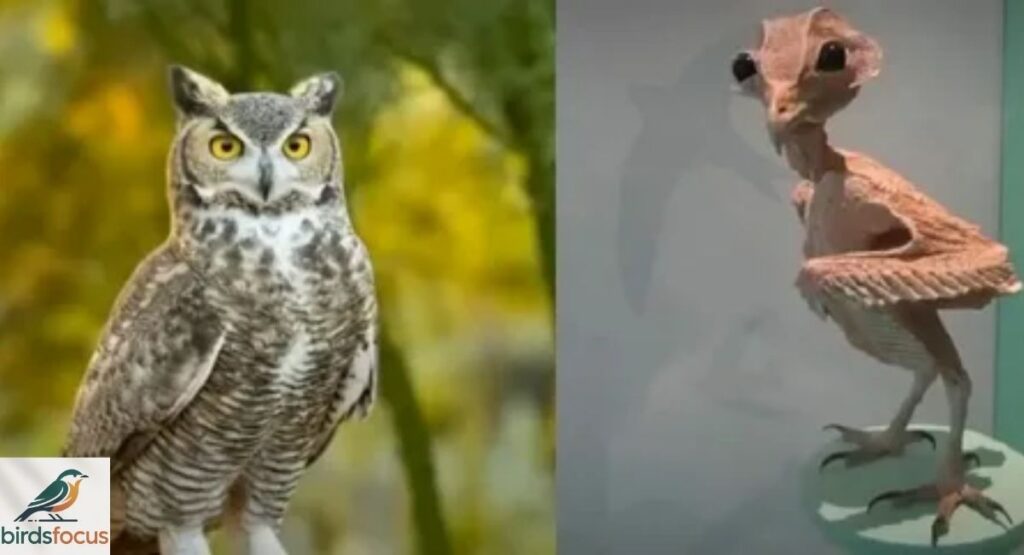
The biggest surprise comes from body shape. Owl feathers create an illusion of size and width. Remove those feathers and the bird suddenly appears narrow and fragile. The neck becomes longer. The legs seem taller. Even experienced bird watchers often struggle to recognize the species.
Many people compare a featherless bird to a tiny raptor from prehistoric times. The transformation feels dramatic because owls rely heavily on thick plumage for their famous silhouette. This is why images of a Featherless Owl spread quickly across social media platforms in America.
| Feature | Feathered Owl | Featherless Owl |
| Body Shape | Round and large | Slim and narrow |
| Face | Soft facial disk | Visible skin structure |
| Legs | Mostly hidden | Clearly visible |
| Appearance | Familiar | Unusual |
Why Does an Owl Become Featherless?
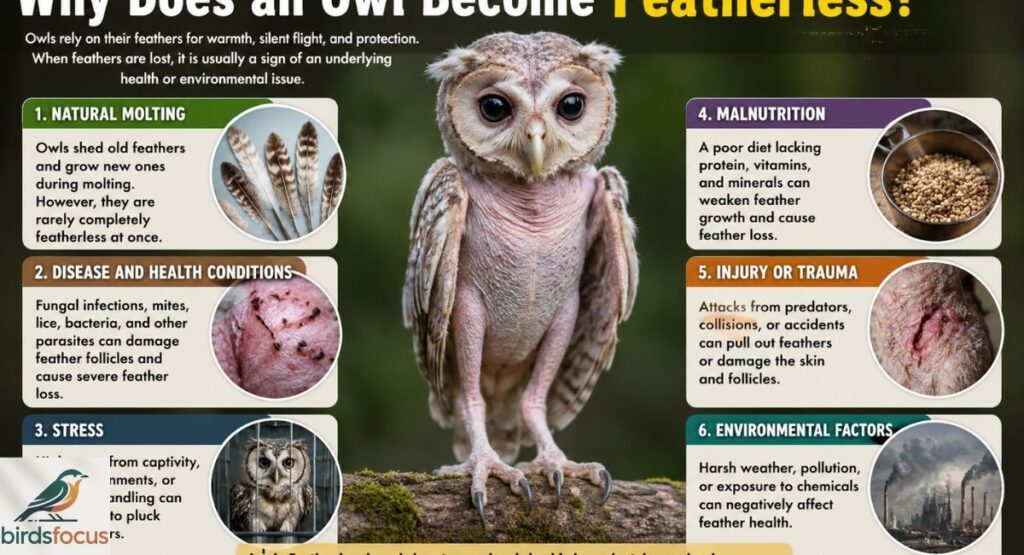
Feathers disappear for several reasons. Some causes are harmless and temporary. Others require immediate medical attention. Wildlife specialists study feather loss carefully because feathers reveal important clues about an owl’s health and environment.
A healthy owl depends on feathers for insulation, silent flight, waterproofing, and communication. Losing them creates serious challenges. This explains why complete feather loss remains uncommon in wild American owl populations.
Natural Molting
Molting is a normal biological process. Owls replace old feathers with fresh ones every year. However, molting rarely creates a completely Featherless Owl because feathers usually fall and regrow in stages rather than all at once.
Disease and Health Conditions
Parasites, fungal infections, damaged follicles, and skin disorders can cause severe feather loss. In rehabilitation centers, experts often examine the skin first because it provides valuable diagnostic information about the bird’s condition.
Stress and Malnutrition
Poor nutrition affects feather production quickly. A lack of protein can slow feather growth while stress may trigger abnormal feather loss. Captive birds face this problem more often than wild birds.
Injury or Trauma
Predator attacks, collisions, and accidents may strip feathers from large parts of the body. Recovery depends on the severity of the damage and the health of the feather follicles beneath the skin.
Can a Featherless Owl Stay Alive?
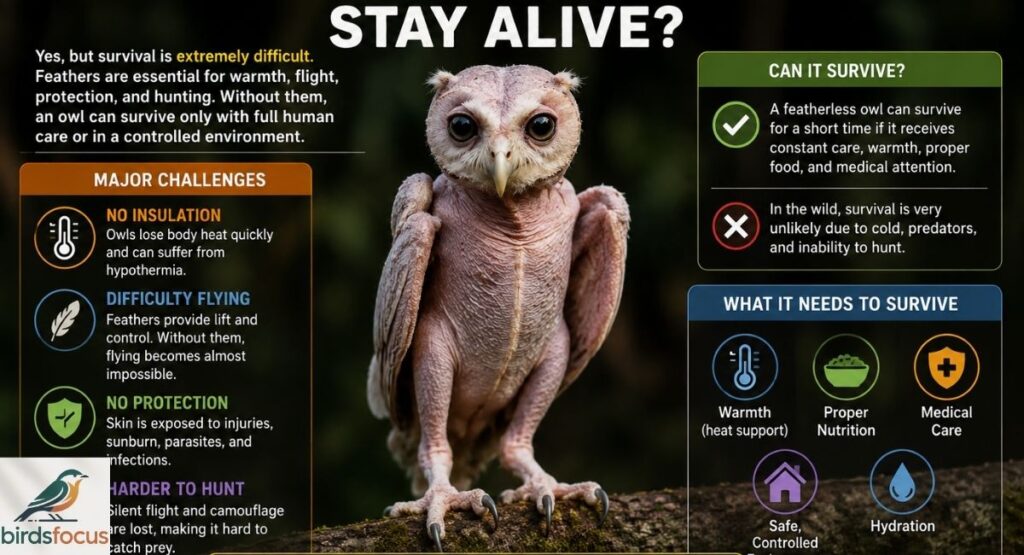
Survival becomes difficult without feathers. Owls use feathers as insulation during freezing winters and hot summers. They also depend on them for silent flight, which is essential for hunting mice and other prey during the night.
Some cases of featherless owl alive sightings come from rescue centers where specialists provide food, treatment, and shelter. Without that support, many severely affected birds struggle to survive in the wild.
How Wildlife Rehabilitation Helps
Wildlife rehabilitators provide medication, balanced diets, and protected environments that encourage feather regrowth. Many rescued owls eventually regain enough plumage to return to their natural habitat.
Featherless Owl Ears Explained
One of the most searched topics involves featherless owl ear anatomy. People often expect hidden ears similar to mammals. Instead, owls have ear openings located beneath the feathers on the sides of their heads.
When feathers disappear, these openings become easier to see. This sudden visibility often surprises viewers and creates confusion about owl anatomy.
Are Owl Ear Tufts Actually Ears?
The famous “horns” are not ears at all. They are feather structures called ear tufts. Their purpose involves camouflage, communication, and visual signaling rather than hearing.
How Owls Hear So Precisely
Owls place their ears at slightly different heights on the skull. This asymmetrical design allows them to calculate the exact position of prey, even under snow or leaves.
The Featherless Owl Meme Phenomenon
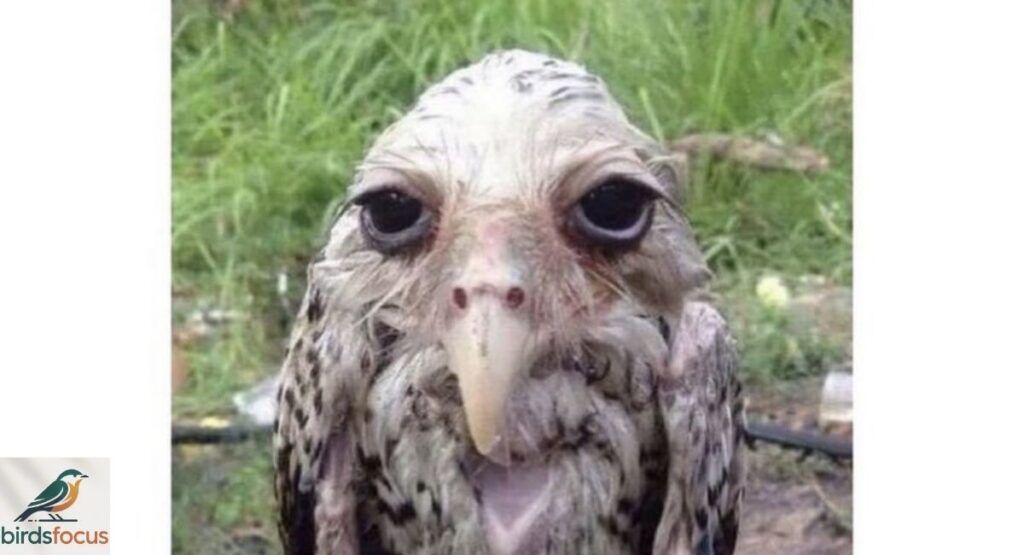
The internet transformed the featherless owl meme into a viral sensation. Millions of users shared photographs because the birds looked almost impossible to believe. Many assumed the pictures were edited or generated by computers.
Psychologists often describe this reaction as the “expectation gap.” People expect a fluffy bird and instead encounter a creature that resembles a tiny dinosaur wearing owl eyes.
Why Featherless Owls Go Viral
Humans enjoy surprises and visual contradictions. A featherless owl delivers both at once. The unusual appearance creates curiosity, humor, and disbelief in equal measure.
Great Horned Owl Without Feathers
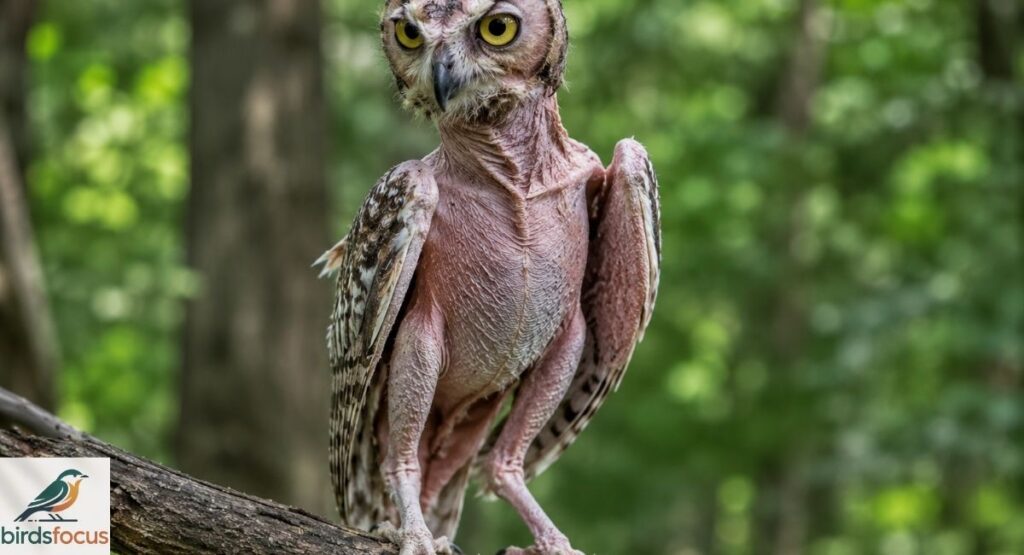
The great horned owl without feathers may be the most dramatic transformation of all North American species. Its powerful chest shrinks visually while its famous shape almost disappears.
Without plumage, the bird reveals a lean frame designed for speed and hunting efficiency rather than appearance. The difference shocks even experienced bird enthusiasts.
What Happens to the Famous Horns?
The famous horns vanish because they are simply feather tufts. Once removed, the owl’s head becomes smooth and rounded.
Snowy Owl Without Feathers
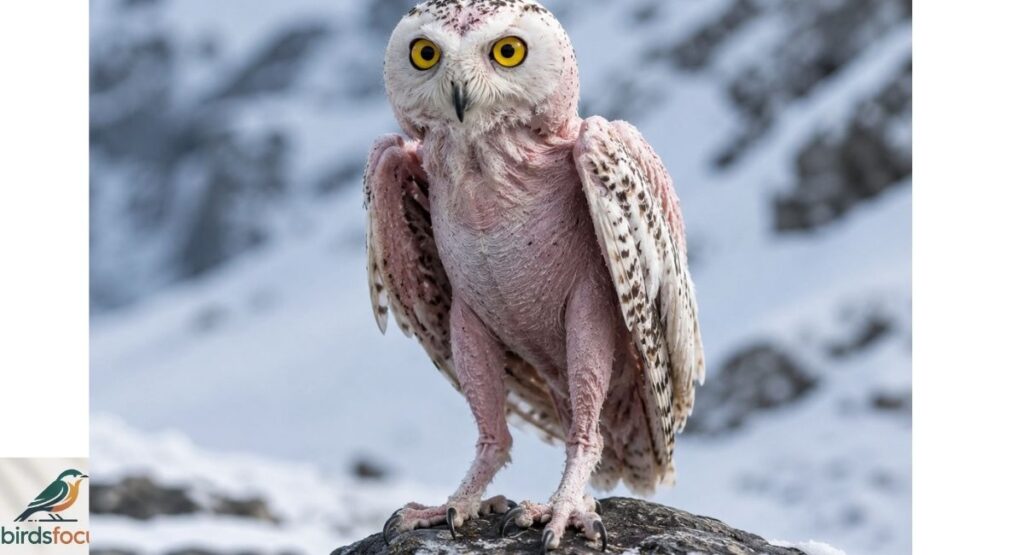
A snowy owl without feathers faces unique challenges because Arctic species rely heavily on insulation. Thick white feathers protect these birds from freezing temperatures and harsh winds.
Without that protective layer, heat escapes rapidly. This makes feather loss particularly dangerous for snowy owls living in cold environments.
Barred Owl Without Feathers
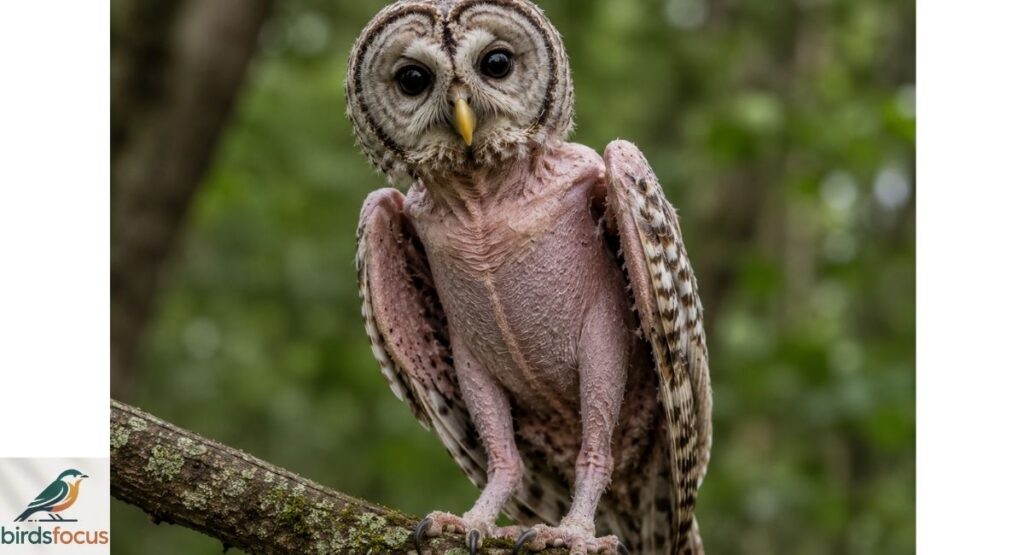
The barred owl without feathers reveals a surprisingly thin body hidden beneath layers of striped plumage. Its famous facial appearance changes dramatically once the feathers disappear.
Many wildlife experts use these cases to teach anatomy because the bird’s muscular structure becomes easier to study and understand.
Barn Owl Without Feathers
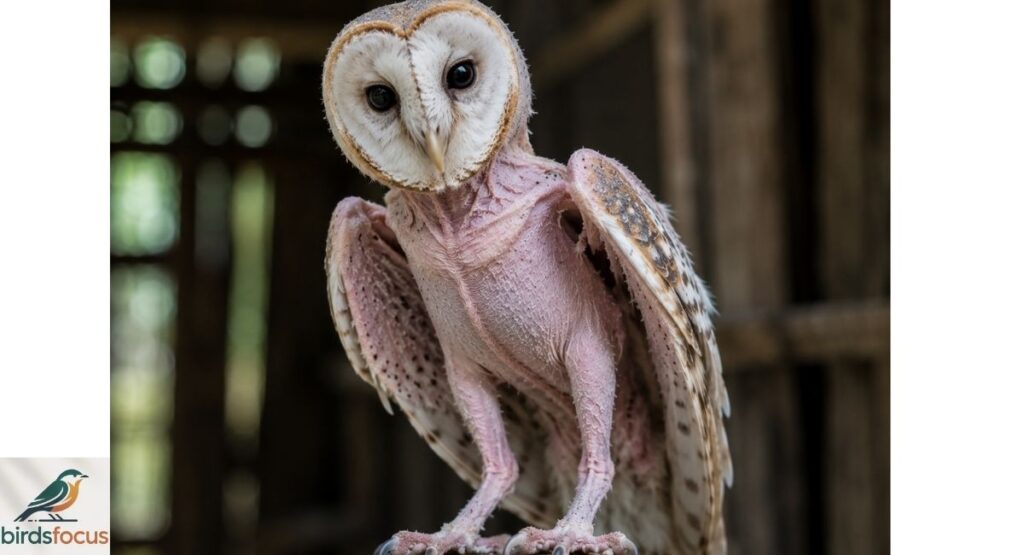
The barn owl without feathers often creates the strongest reaction among viewers. The famous heart-shaped face becomes almost unrecognizable without specialized facial feathers.
These feathers do more than create beauty. They collect sound waves and direct them toward the ears, improving hunting precision in darkness.
Why Barn Owls Look the Most Different
Barn owls possess one of the most specialized facial structures in the bird world. Removing those feathers changes their appearance more dramatically than almost any other owl species.
Featherless Owl vs Featherless Birds
Most birds appear smaller without feathers. However, owls create stronger reactions because their feathers hide such a large percentage of their true body shape.
Chickens, parrots, and vultures still resemble their normal appearance after feather loss. A Featherless Owl often looks like an entirely different species.
| Bird | Appearance Change | Public Reaction |
| Owl | Extreme | Shock |
| Chicken | Moderate | Surprise |
| Parrot | Noticeable | Curiosity |
| Vulture | Minor | Limited |
Are Featherless Owl Photos Real or Edited?
Many famous photographs are completely real. Veterinarians and rehabilitation centers have documented genuine cases involving disease, trauma, and recovery. However, artificial intelligence has recently increased confusion online.
Experts recommend checking image sources carefully. Verified wildlife organizations usually provide context, medical details, and recovery information alongside authentic photographs.
How Do Feathers Help Owls Fly Silently?
Owls are famous for their silent flight. Special feather edges break up air turbulence and reduce noise while flying. This unique design allows a Featherless Owl to reveal just how important feathers are for hunting success. Without them, wing movement becomes louder and less efficient.
Scientists often call owl feathers one of nature’s finest engineering designs. Soft feather surfaces absorb sound and help owls approach prey without warning. This silent movement gives owls a major advantage during nighttime hunting.
Where Have Featherless Owls Been Found in the United States?
Wildlife rehabilitation centers across the United States occasionally receive featherless owls suffering from injury, disease, or nutritional problems. States with active bird rescue programs report these rare cases more often because specialists document and share their findings.
Most featherless owl cases involve common species such as barred owl without feathers sightings or injured great horned owl without feathers patients. Complete feather loss remains uncommon in healthy wild populations.
How to Tell if a Featherless Owl Needs Rescue or Medical Help
A healthy owl should have full plumage, bright eyes, and strong movement. Visible skin patches, difficulty flying, or unusual behavior may signal that the bird needs professional help. Young owls can sometimes appear patchy during normal feather development.
If you discover an injured or weak owl, avoid handling it unless necessary for safety. Contact a licensed wildlife rehabilitator or local animal rescue organization for guidance. Professional care gives injured birds the best chance of recovery and release.
Fascinating Facts About Featherless Owls
A Featherless Owl reveals a hidden side of owl anatomy that most people never see. Thick feathers can make an owl appear two or three times larger than its actual body size. Once those feathers disappear, the bird’s slender frame, long legs, and narrow neck become visible. This dramatic change explains why many people mistake real featherless owl photos for edited images or internet jokes.
Another surprising fact is that owl feathers do far more than provide warmth. They help create nearly silent flight, improve camouflage, and even assist with hunting. A great horned owl without feathers loses its famous “horns” because they are actually feather tufts rather than real ears. Likewise, the facial feathers of a barn owl without feathers act like a sound collector, helping the bird detect prey with extraordinary precision even in complete darkness.
Conclusion
A Featherless Owl may look strange, yet its appearance tells an important biological story. Feathers shape the owl’s body, protect it from weather, and make silent hunting possible. Remove them and the hidden architecture of one of nature’s greatest predators suddenly appears.
The next time you see a viral owl image online, remember that science often explains what first appears impossible. Behind every shocking photograph lies an extraordinary lesson about adaptation, anatomy, and survival.
FAQs
1. Is a Featherless Owl real?
Yes, a Featherless Owl is real. Owls can lose feathers because of illness, injury, stress, or natural molting.
2. Can a featherless owl survive in the wild?
A severely featherless owl often struggles to survive because feathers are essential for warmth, flight, and hunting.
3. Are owl ear tufts actually ears?
No, owl ear tufts are not ears. They are special feathers used for camouflage and communication.
4. Why do featherless owl photos look fake?
Without feathers, an owl’s slim body and long legs become visible, making it look very different from its usual appearance.
5. Which owl species looks the strangest without feathers?
Many people believe the barn owl without feathers looks the most unusual because its famous heart-shaped face disappears.

Welcome to birdsfocus! I’m Anam Sattar, an AI Powered SEO, and Content Writer with 4 years of experirnce.
I help websites rank higher,grow traffic, and look amazing. My goal is to make SEO and web design simple and effective for everyone.
Let’s achieve more together!