


Briefly introducing one of Africa’s most dazzling birds, the Violet-Backed Starling stands out for its brilliant colors and graceful behavior. This remarkable species attracts birdwatchers and wildlife photographers because of its striking appearance and pleasant vocalizations. Native to sub-Saharan Africa, the Violet-Backed Starling bird thrives in open woodlands and savannas where food remains abundant.
One fascinating feature is the dramatic difference between males and the female Violet-Backed Starling, making identification easier. Beyond beauty, this species contributes to healthy ecosystems by spreading seeds and controlling insects. From its distinctive Violet-Backed Starling sound to its elegant flight, this bird continues to captivate nature lovers around the world.
Physical Appearance of the Violet-Backed Starling
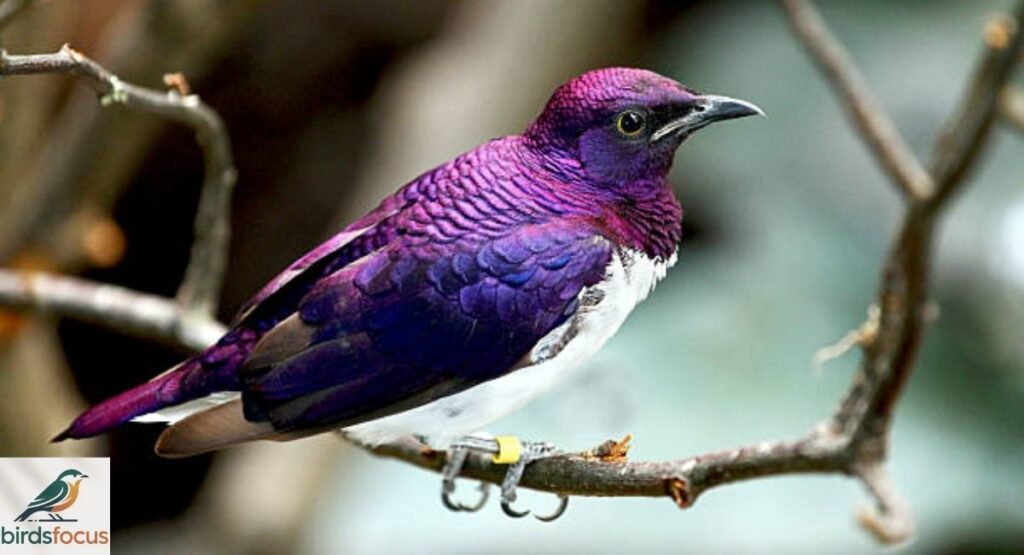
The breathtaking plumage of the Violet-Backed Starling makes it easy to understand why birdwatchers treasure this species. Adult males possess glossy purple feathers that shine differently under sunlight. Their lower body remains bright white. This contrast creates an elegant appearance. During the breeding season, the colors become even richer. The bird measures about eight inches long and has a streamlined shape that helps it move quickly through trees and open woodland.
Female birds look entirely different. Their upper body features brown shades while the underparts display dark streaks. This coloration helps them blend into their surroundings. Young birds resemble females before developing adult characteristics. These differences help scientists identify age and sex in the field. Such dramatic contrasts make the female Violet-Backed Starling one of the most fascinating examples of sexual dimorphism among African birds.
| Feature | Male | Female |
| Back Color | Violet-purple | Brown |
| Underparts | Pure white | Cream with streaks |
| Brightness | Highly iridescent | Subtle |
| Visibility | Very noticeable | Camouflaged |
| Main Role | Courtship display | Nest protection |
Habitat and Distribution
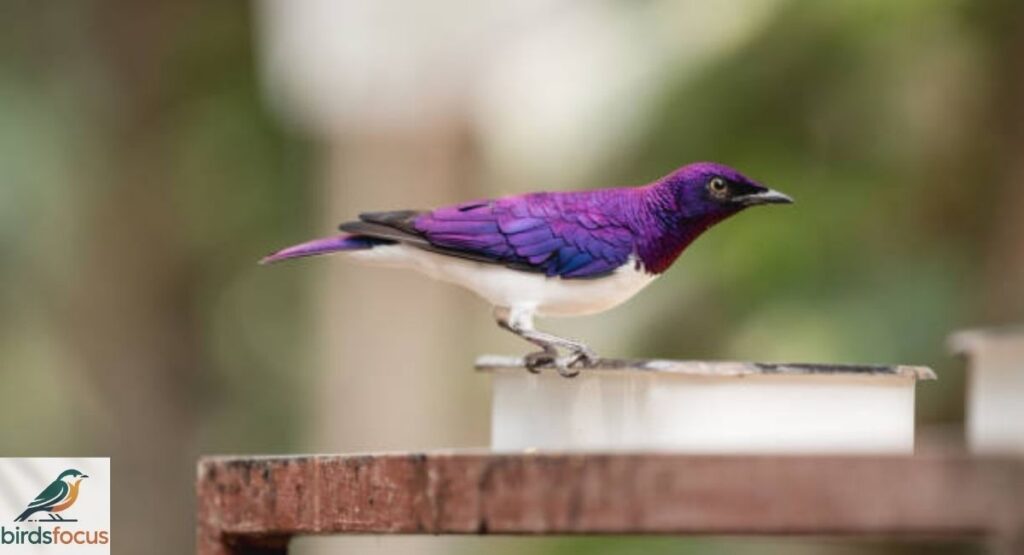
Across Africa, the Violet-Backed Starling occupies a wide range of habitats. It favors open woodlands, savannas, riverbanks, and acacia forests. Unlike some birds that remain in one location, this species follows seasonal food sources. Rainfall patterns often influence where flocks gather. Regions with abundant fruiting trees attract larger numbers during feeding periods. Their adaptability allows them to thrive in several ecosystems.
The bird occurs in countries such as Kenya, Tanzania, Botswana, Zambia, South Africa, and Namibia. Seasonal movements help them locate food and suitable breeding areas. Instead of long migrations like geese, these birds display nomadic behavior. They shift gradually depending on weather conditions and fruit availability. This flexibility contributes to the success of the Violet-Backed Starling across a vast geographic range.
| Region | Presence |
| East Africa | Common |
| Southern Africa | Abundant |
| Central Africa | Moderate |
| West Africa | Local populations |
Flying Behavior and Movement
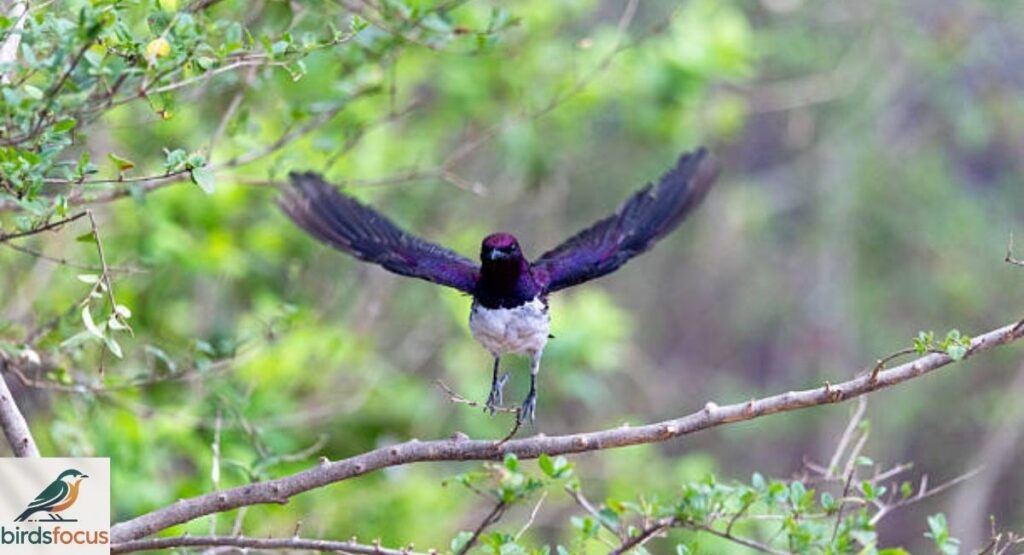
Watching a Violet-Backed Starling in flight resembles watching a dancer move across a stage. The bird performs quick turns and smooth glides with remarkable agility. Its lightweight body and pointed wings allow efficient travel between feeding grounds. Small flocks often move together while maintaining excellent coordination. Their flight pattern appears swift yet graceful.
Daily routines usually involve searching for fruiting trees and safe resting places. During certain seasons, birds travel farther in response to rainfall and food abundance. These movements are not true migrations. Instead, they reflect an adaptive strategy that maximizes survival. Such flexibility explains why the flying Violet-Backed Starling thrives across diverse environments.
Violet-Backed Starling Sound and Calls
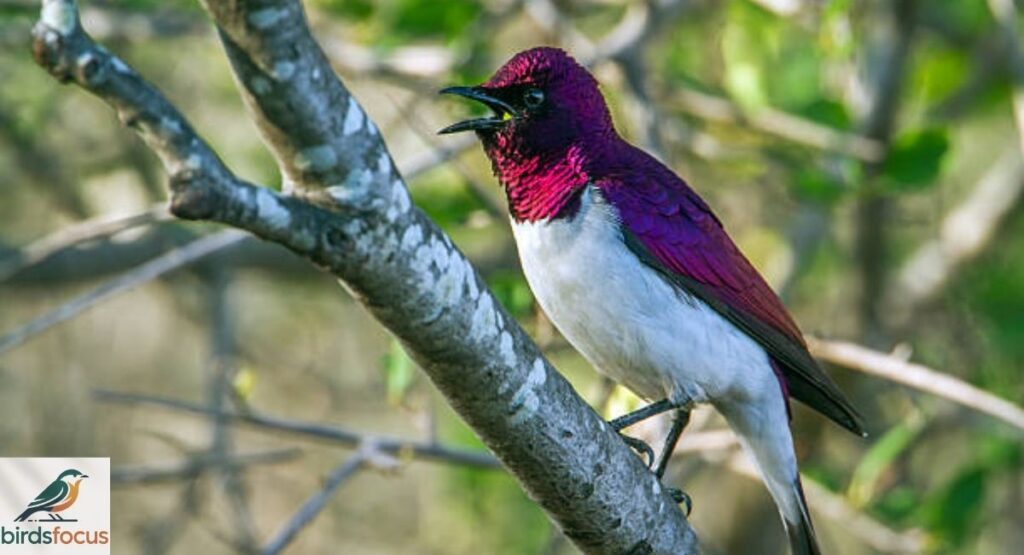
Sound plays an important role in the life of the Violet-Backed Starling. The bird produces pleasant whistles, soft chirps, and short trills. These sounds help maintain contact between flock members. During breeding season, males increase vocal activity to attract mates. Their songs remain gentle rather than loud.
Birdwatchers often rely on the Violet-Backed Starling sound to locate hidden individuals among dense branches. Calls differ slightly between males and females. Young birds also produce softer notes when requesting food. Vocal communication strengthens social bonds and improves survival within groups.
“Nature’s colors often tell stories. The Violet-Backed Starling tells one of beauty and survival.”
Diet and Feeding Habits
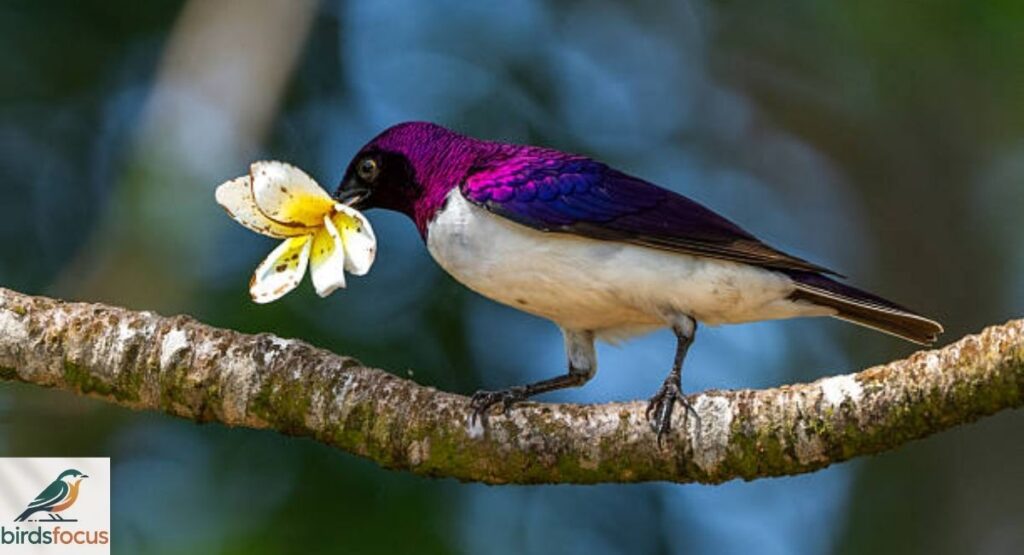
Fruit forms the foundation of the Violet-Backed Starling diet. Figs, berries, and other soft fruits provide valuable nutrients. Insects supplement this menu and offer essential proteins. Beetles, caterpillars, and termites frequently appear among their preferred prey. During breeding periods, insect consumption increases because growing chicks require additional protein.
These birds often feed in tree canopies where fruit remains plentiful. Sometimes they capture insects while flying. This behavior demonstrates remarkable versatility. Their feeding habits also benefit forests because seeds pass through the digestive system and later germinate in new areas. In this way, the Violet-Backed Starling bird acts as a natural gardener.
| Main Foods | Importance |
| Fruits | Energy source |
| Berries | Vitamins |
| Beetles | Protein |
| Caterpillars | Chick development |
| Termites | Seasonal nutrition |
Breeding and Nesting
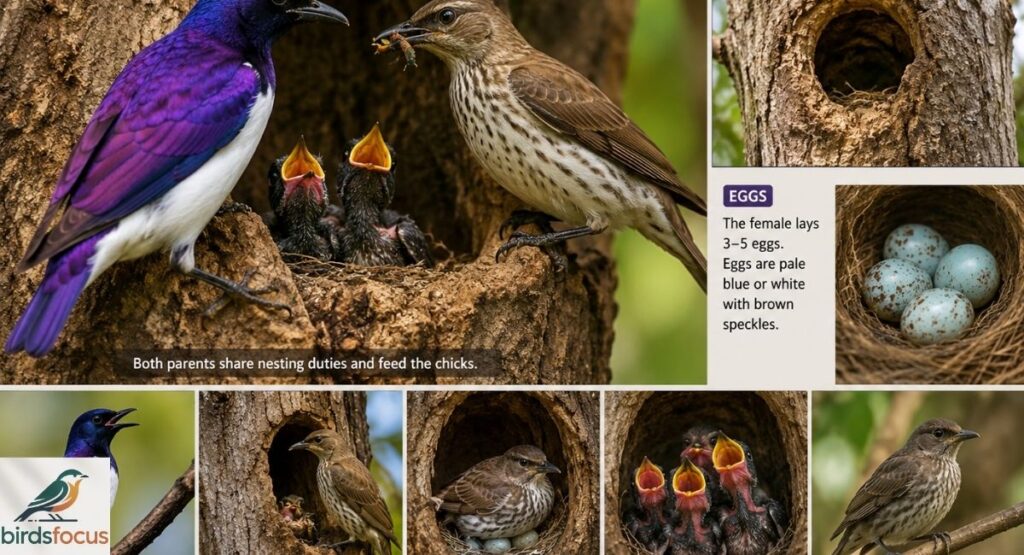
As breeding season approaches, male Violet-Backed Starlings display brilliant feathers to attract females. Courtship involves singing and showing off colorful plumage. After pairing, the birds search for suitable nesting cavities. Tree holes provide protection from predators and harsh weather. Both parents contribute to raising young.
Females usually lay several eggs. Incubation lasts about two weeks. Once chicks hatch, parents share feeding duties. Young birds grow quickly and leave the nest after several weeks. Family cooperation increases survival rates and strengthens the population.
“A single glimpse of a Violet-Backed Starling often leaves a memory that lasts a lifetime.”
Violet-Backed Starling Location
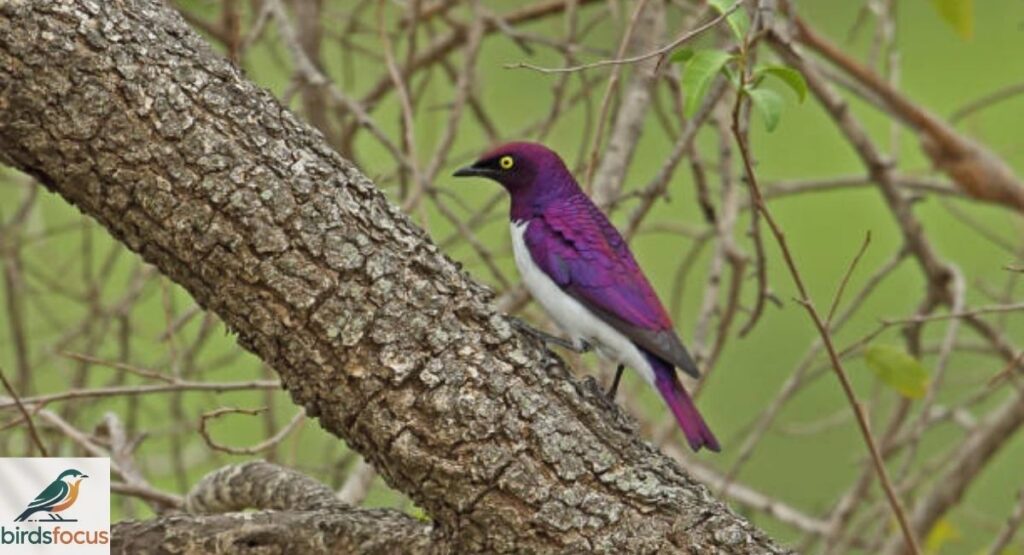
Finding the Violet-Backed Starling requires traveling to parts of sub-Saharan Africa. This colorful species inhabits many countries, including South Africa, Kenya, Tanzania, Botswana, Zambia, Zimbabwe, Namibia, and Uganda. Woodlands and savannas with fruit-bearing trees provide ideal conditions. Unlike some birds that remain fixed in one area, these starlings move according to rainfall and food availability. As a result, birdwatchers often observe seasonal changes in local populations.
Several wildlife reserves and national parks offer excellent opportunities for sightings. South Africa’s Kruger National Park and Botswana’s Okavango Delta attract bird enthusiasts from around the world. Although the species does not naturally occur in North America, some zoological collections and aviaries occasionally house captive individuals. For American bird lovers, African safaris remain the best way to experience the beauty of the Violet-Backed Starling location firsthand.
| Country | Presence |
| South Africa | Very Common |
| Kenya | Common |
| Tanzania | Common |
| Botswana | Abundant |
| Zambia | Widespread |
| Namibia | Moderate |
| Uganda | Local Populations |
Can a Violet-Backed Starling Be Kept as a Pet?
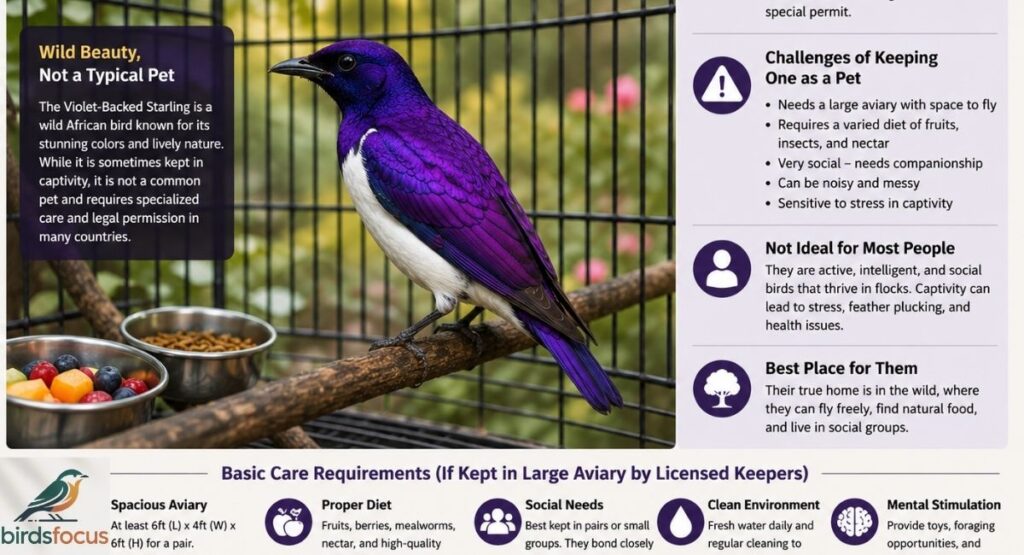
Many bird enthusiasts wonder whether the Violet-Backed Starling can live comfortably as a companion bird. In reality, this species thrives best in its natural environment. Wildlife laws differ from country to country. Some regions restrict ownership while others require permits. Even when legal, keeping these birds demands extensive knowledge and specialized care. Their social behavior and active lifestyle make captivity challenging.
Providing proper nutrition, spacious enclosures, and mental stimulation requires considerable effort. These birds need room to fly and interact naturally. Isolation may lead to stress and abnormal behavior. Ethical concerns also arise because wild populations deserve protection. Most experts encourage people to appreciate the Violet-Backed Starling pet through birdwatching and photography rather than captivity.
“Wild birds belong where they evolved. Nature remains their finest home.”
| Requirement | Importance |
| Large Aviary | Essential |
| Fresh Fruits | Daily Need |
| Protein Sources | Necessary |
| Social Interaction | Important |
| Environmental Enrichment | Critical |
Interesting Facts About the Violet-Backed Starling
Nature often surprises us with remarkable creatures. The Violet-Backed Starling offers several fascinating examples. Older scientific literature sometimes refers to this species as the Plum-Coloured Starling. The brilliant violet plumage comes from microscopic feather structures rather than pigments alone. Light reflection creates the dazzling colors that photographers admire.
Another intriguing fact involves the dramatic differences between males and females. Few bird species display such striking sexual dimorphism. These birds also play a valuable ecological role by spreading seeds throughout forests and woodlands. Their movements often follow seasonal rainfall patterns. Scientists consider them important indicators of environmental health. Such qualities explain why the Violet-Backed Starling bird remains one of Africa’s most admired avian treasures.
Remarkable Features of the Violet-Backed Starling
The shimmering feathers of males represent one of the species’ most impressive traits. Their colors appear brighter under direct sunlight and may change depending on viewing angles. This optical effect resembles gemstones reflecting light. Meanwhile, females rely on camouflage for protection during nesting. Nature created beauty and practicality in perfect balance.
Birdwatchers frequently compare the species to flying jewels. Their soft whistles, graceful flight, and vibrant appearance make them memorable. Even experienced ornithologists consider the female Violet-Backed Starling and its colorful mate among the finest examples of avian diversity.
Comparison Between Male and Female Violet-Backed Starlings
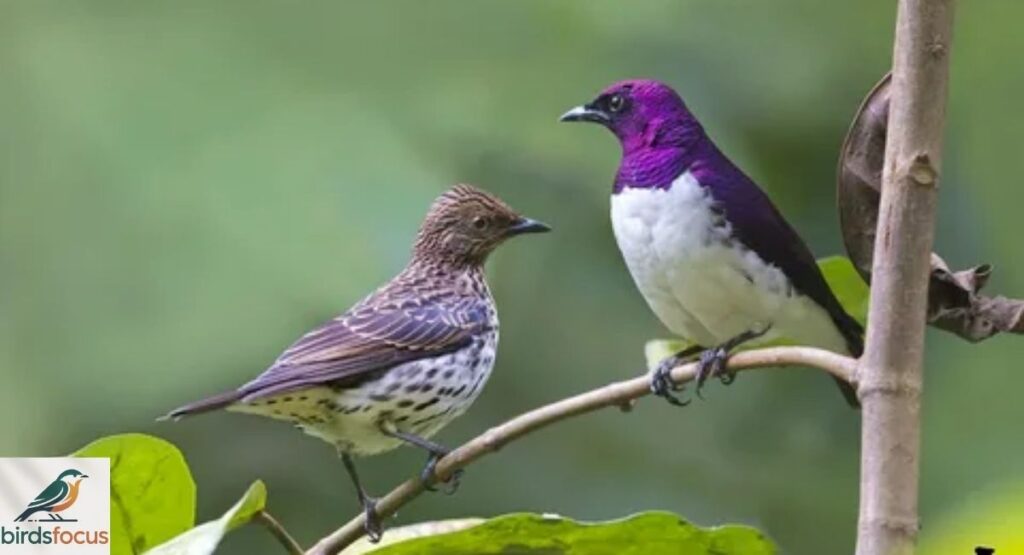
One glance reveals that male and female Violet-Backed Starlings look almost like different species. Males possess brilliant violet upperparts with snow-white underparts. Their feathers shine with an iridescent glow. Females display brown upperparts and heavily streaked cream underparts. These colors help conceal them while nesting. Such differences improve reproductive success and survival.
Behavior also varies slightly between sexes. Males invest heavily in courtship displays while females focus more on incubation and chick care. Despite these distinctions, both parents cooperate during the breeding season. Their teamwork helps young birds reach adulthood successfully. This partnership represents one of the species’ greatest strengths.
| Feature | Male | Female |
| Upper Body | Violet-purple | Brown |
| Underparts | Bright white | Cream with streaks |
| Feather Shine | Strong iridescence | Minimal |
| Courtship Role | Primary display | Mate selection |
| Nest Duties | Shared care | Major incubation role |
| Visibility | Highly noticeable | Camouflaged |
Conservation Status
Fortunately, the Violet-Backed Starling currently enjoys stable population numbers. The International Union for Conservation of Nature classifies the species as Least Concern. This status means extinction risk remains relatively low. Wide distribution and adaptability contribute to their success. Healthy populations continue to inhabit much of Africa.
However, habitat loss and climate change present growing challenges. Deforestation reduces nesting opportunities and decreases food availability. Extreme weather patterns may alter seasonal movements. Conservation organizations emphasize habitat preservation to ensure long-term survival. Protecting forests and savannas benefits not only the Violet-Backed Starling but countless other species that share the same ecosystems.
| Conservation Factor | Current Situation |
| IUCN Status | Least Concern |
| Population Trend | Stable |
| Main Threat | Habitat Loss |
| Climate Impact | Increasing Concern |
| Conservation Need | Habitat Protection |
Conclusion
The Violet-Backed Starling is one of Africa’s most beautiful birds. Its colorful plumage, unique calls, graceful flight, and fascinating differences between males and females make it truly special. Understanding its habitat, diet, nesting habits, and distribution helps bird lovers appreciate this remarkable species even more.
Whether you are a birdwatcher, photographer, or simply curious about wildlife, the Violet-Backed Starling bird offers plenty to admire. Protecting its natural habitats will help future generations continue enjoying the beauty and ecological importance of this extraordinary bird.
FAQs
What is a Violet-Backed Starling?
The Violet-Backed Starling is a colorful African bird known for its shiny purple plumage and distinctive appearance.
Where can you find a Violet-Backed Starling?
This species is native to sub-Saharan Africa and commonly lives in woodlands, savannas, and open forests.
What does a female Violet-Backed Starling look like?
The female Violet-Backed Starling has brown upperparts and streaked cream underparts, which help it blend into its surroundings.
What does a Violet-Backed Starling eat?
Its diet mainly consists of fruits, berries, insects, and small invertebrates that provide essential nutrients.
Can a Violet-Backed Starling be kept as a pet?
Although some captive birds exist, the Violet-Backed Starling is best appreciated in the wild where it can display its natural behavior.

Welcome to birdsfocus! I’m Anam Sattar, an AI Powered SEO, and Content Writer with 4 years of experirnce.
I help websites rank higher,grow traffic, and look amazing. My goal is to make SEO and web design simple and effective for everyone.
Let’s achieve more together!